Global agriculture is undergoing a significant transformation as farmers seek cost-effective and environmentally friendly ways to reduce post-harvest losses. One such innovation gaining momentum is the use of solar dryers to preserve fruits, vegetables, herbs, and grains. By harnessing the sun’s energy, these systems offer an eco-friendly alternative to conventional drying methods, improving food security and enhancing rural livelihoods. This article explores the technology behind solar dryers, their practical benefits, and the path forward for widespread adoption in farming communities.
Harnessing Solar Technology for Crop Preservation
Traditional sun-drying techniques involve spreading produce on mats or rooftops, leaving it vulnerable to pests, dust, and unpredictable weather. In contrast, modern solar dryers employ passive or active designs that channel radiant heat into a contained chamber, where controlled airflow quickly and uniformly removes moisture. This approach maintains higher nutrient quality, preserves flavor, and extends shelf life far beyond conventional methods.
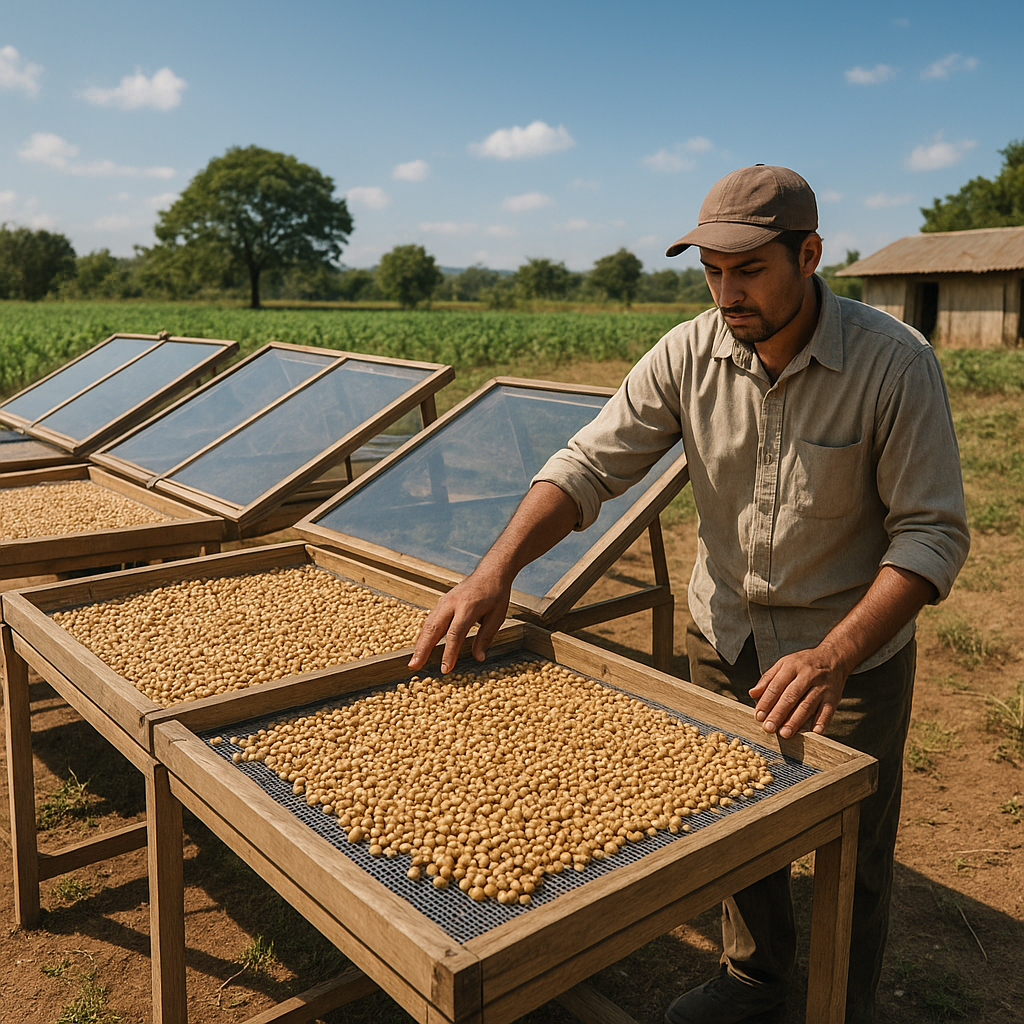
Passive solar dryers rely on natural convection, drawing air through transparent or semi-transparent panels into an insulated drying compartment. As sunlight passes through glazing materials, it heats the interior air, which rises and escapes through vents, drawing in fresh air from below. Active solar dryers, meanwhile, supplement natural circulation with small, energy-efficient fans powered by photovoltaic panels. These fans enhance airflow and reduce drying time, making the system viable even during less intense sunshine or partial cloud cover.
Design Principles and Benefits of Solar Dryers
Key Components and Construction
Solar dryers consist of three main components: a sun-facing absorber or collector, a drying chamber, and ventilation outlets. The absorber—often painted black to maximize heat absorption—transfers warmth to both the air and the produce itself. Transparent glazing, such as tempered glass or polycarbonate sheets, traps heat while allowing sunlight to penetrate. The drying chamber is insulated to minimize heat loss, and mesh trays or racks hold the crop to ensure uniform exposure.
Advantages Over Conventional Methods
- Reduced contamination: Enclosed chambers limit dust, insects, and animal access.
- Improved quality: Consistent drying retains higher levels of vitamins, aromas, and texture.
- Lower energy costs: Solar-powered operation eliminates reliance on fossil fuels or grid electricity.
- Climate resilience: Farmers gain a reliable method to preserve surplus during peak harvests, sustaining income through off-season sales.
- Scalability: Systems range from small wooden cabinets for family farms to large greenhouse-style dryers serving community cooperatives.
Impact on Farmers and Food Supply Chains
Implementing solar dryers can drastically cut down on post-harvest losses, which in some regions exceed 30%. For smallholder farmers, this means transforming wasted yield into a valuable product. Dried fruits, peppers, grains, and even medicinal herbs can fetch premium prices at local markets or be exported, boosting household incomes and economic resilience.
Community-based solar drying stations foster cooperative models where multiple farmers pool resources to construct and maintain larger units. This collaborative approach reduces individual costs and encourages knowledge sharing. Furthermore, by producing high-quality dried goods, these cooperatives can meet the strict standards of urban retailers and international buyers, enhancing market access and strengthening rural economies.
Challenges and Future Prospects
Despite clear benefits, several obstacles must be addressed for widespread adoption. Upfront capital costs, though modest compared to mechanical dryers, can still be prohibitive for resource-limited farmers. Access to construction materials—glass, insulation, metal frames—and technical expertise for design optimization remains uneven. Training programs, microfinance options, and government or NGO subsidies play a critical role in overcoming these barriers.
Ongoing research focuses on integrating climate resilience features, such as hybrid systems with biomass or biogas heaters to supplement drying during rainy seasons. Advances in low-cost sensors and IoT-enabled monitoring allow farmers to track temperature and humidity remotely, ensuring optimal drying conditions and preventing over-drying or spoilage.
Looking Ahead
Expanding local manufacturing of solar dryer components can stimulate rural industries and reduce installation lead times. Partnerships between agricultural extension services, engineering institutes, and private enterprises are essential for developing standardized, affordable designs that can be adapted to diverse climatic zones.
The journey toward sustainable crop preservation through solar technology illustrates a powerful synergy of traditional wisdom and modern innovation. By scaling up these solutions, the agricultural sector can move closer to achieving global goals of sustainability, economic upliftment, and resilient food systems.