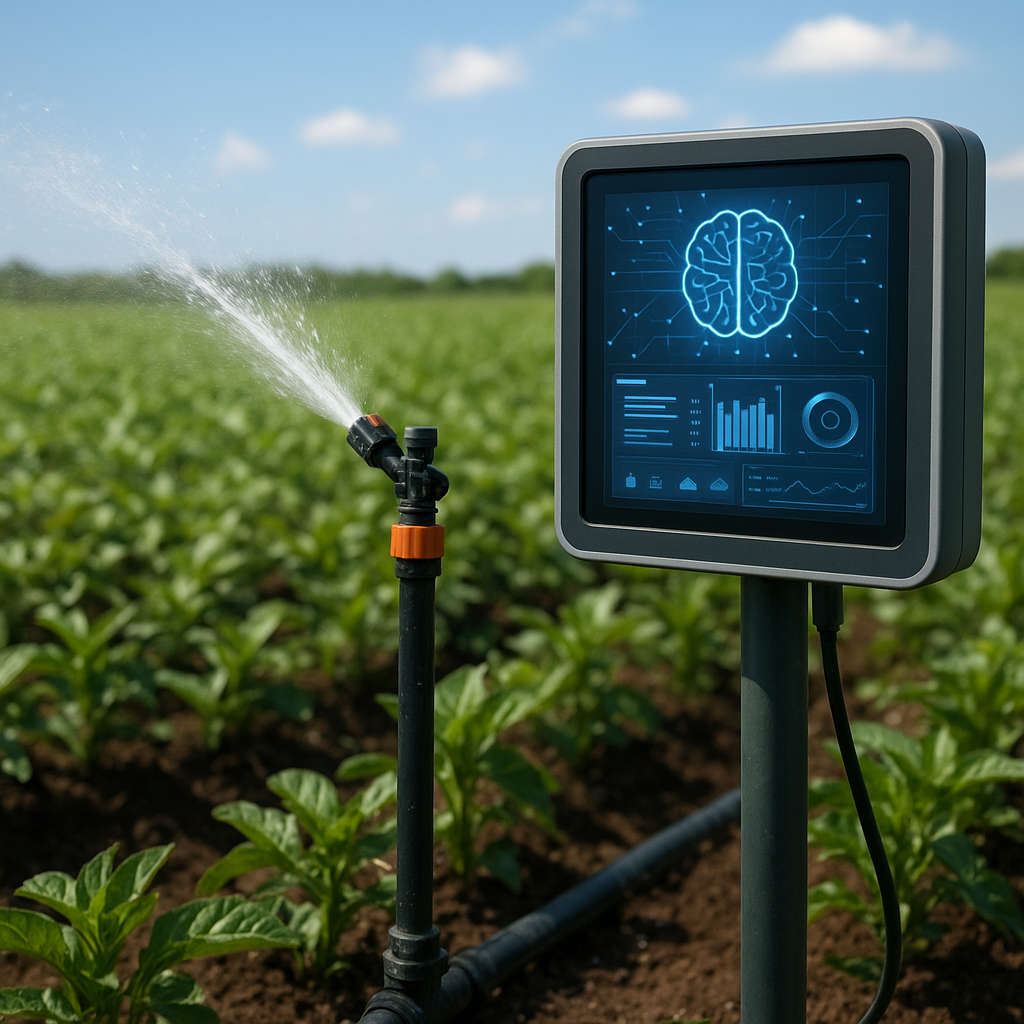
Smart irrigation systems empowered by artificial intelligence are transforming agricultural practices globally. Traditional watering strategies often rely on fixed schedules or manual adjustments that can lead to water waste, uneven crop growth, and labor-intensive monitoring. By contrast, AI-driven solutions use advanced algorithms to analyze a wide range of environmental inputs—from soil moisture to weather forecasts—allowing farmers to apply precise water doses exactly when and where they are needed. This approach maximizes water efficiency and promotes sustainability in farming operations of all scales.
Understanding AI-Driven Irrigation Mechanics
At the core of any smart irrigation deployment lies a network of field devices and computational models working in concert. Soil probes, aerial imaging drones, and weather stations serve as the primary data collectors. These sensors continuously feed measurements like soil moisture level, ambient temperature, humidity, and solar radiation into a centralized platform. Meanwhile, satellite-based remote sensing can supply supplemental insights on crop health and evapotranspiration rates across extensive acreage.
Once gathered, the data is processed via machine learning algorithms designed for predictive analytics. These models identify patterns such as daily water loss by crops, soil absorption capacity, and upcoming rainfall probabilities. By forecasting the precise irrigation needs hours or days in advance, the system can orchestrate valve activations, drip line flows, and sprinkler distributions with minimal human intervention. The result is a closed-loop watering regime that adapts dynamically to changing field conditions.
Custom water application profiles are generated for each crop variety by combining phenological models with cultivar-specific growth stages. High-resolution topographic mapping ensures slope compensation and drainage modelling, enabling variable rate irrigation (VRI) across a pivot or lateral move system. By assimilating spatial data into the control logic, VRI adjusts water output across microzones to match soil heterogeneity, resulting in uniform plant stress levels and synchronized maturation for streamlined harvest.
Key Technologies Enabling Precision Agriculture
IoT and Wireless Sensor Networks
Deploying thousands of connected nodes across a farm enables high-resolution capture of microenvironmental variation. Mesh networking protocols and low-power Wide Area Networks such as LoRaWAN and NB-IoT ensure that these devices can operate for months on battery or solar power without manual maintenance. Each unit can monitor variables like soil salinity, moisture tension, pH levels, and nutrient concentration, relaying information in near real-time data streams to cloud platforms for immediate action.
Edge Computing and Cloud Integration
To minimize latency and bandwidth consumption, edge computing nodes preprocess critical signals from the field. Local microcontrollers perform initial anomaly detection and basic control decisions—such as shutting off irrigation when moisture thresholds are exceeded or launching emergency pulses during heat spikes. More complex tasks such as model retraining, multi-field optimization, and long-term trend analysis occur in the cloud, where scalable containerized microservices and API-based integrations facilitate interoperability across vendor ecosystems.
Weather Forecast APIs and Data Fusion
Integrating advanced meteorological APIs allows the system to ingest hyperlocal weather forecasts and global climate models. By fusing short-term radar data with seasonal predictions, AI engines can anticipate extreme events like droughts or storms, adjusting irrigation schedules proactively. This predictive capability reduces dependency on external irrigation during heavy rains and secures optimal hydration leading into dry spells.
Remote Sensing and Imaging
High-resolution imagery—from drones, fixed-wing aircraft, or satellites—provides a macroscopic view of crop vigor and soil uniformity. Computer vision algorithms detect areas of plant stress, pest infestation, or uneven germination, triggering targeted irrigation or auxiliary treatments. Coupling this aerial data with in-situ sensor readings elevates the system’s ability to fine-tune water allocation, ensuring each zone within a field receives its optimal share.
Benefits, Challenges and Future Trends
Implementing AI-based irrigation delivers multiple advantages. Farms can cut water use by up to 50% while boosting yields due to enhanced root zone conditions. Labor costs decrease as routine monitoring tasks are automated. Decision makers gain actionable insights through intuitive dashboards, empowering proactive adjustments before issues escalate. Moreover, precise irrigation enhances soil structure and reduces runoff, aligning with environmental compliance goals.
- Increased crop productivity
- Reduced energy consumption
- Enhanced resilience to drought
- Lowered fertilizer leaching
Despite its potential, smart irrigation faces several obstacles. Initial capital investments for hardware and software can be substantial, particularly for smallholder farmers. Reliable internet connectivity remains a barrier in remote regions. Data security and interoperability between diverse vendor systems pose integration challenges. Additionally, algorithmic biases may emerge if training datasets do not accurately represent local soil and climate variations.
Economic analyses indicate that payback periods for fully integrated AI-irrigation setups range from two to five years, depending on crop value, land size, and water costs. Extension services and cooperative models can help defray upfront expenses by sharing infrastructure among multiple growers. Training programs are essential to equip agronomists and technicians with skills in system calibration, data interpretation, and maintenance protocols.
Looking ahead, the convergence of AI with other innovations promises further advances. Integrating blockchain can ensure transparent water usage records and enable new water credit trading schemes. Swarm robotics could perform simultaneous irrigation and weeding tasks with centimeter-level precision. Continuous improvements in sensor miniaturization and battery efficiency will lower deployment costs, democratizing access to precision agriculture technologies. By leveraging collective intelligence from multiple farms, future platforms may unlock regional-scale water management strategies that surpass individual field optimizations.
Ultimately, melding automation and intelligent resource management sets the stage for a resilient agriculture sector capable of meeting growing global food demands under climate uncertainty. As research into more sophisticated algorithms and multi-modal data fusion proceeds, farmers gain unprecedented control over their fields, unlocking a new era of sustainable productivity and environmental stewardship.