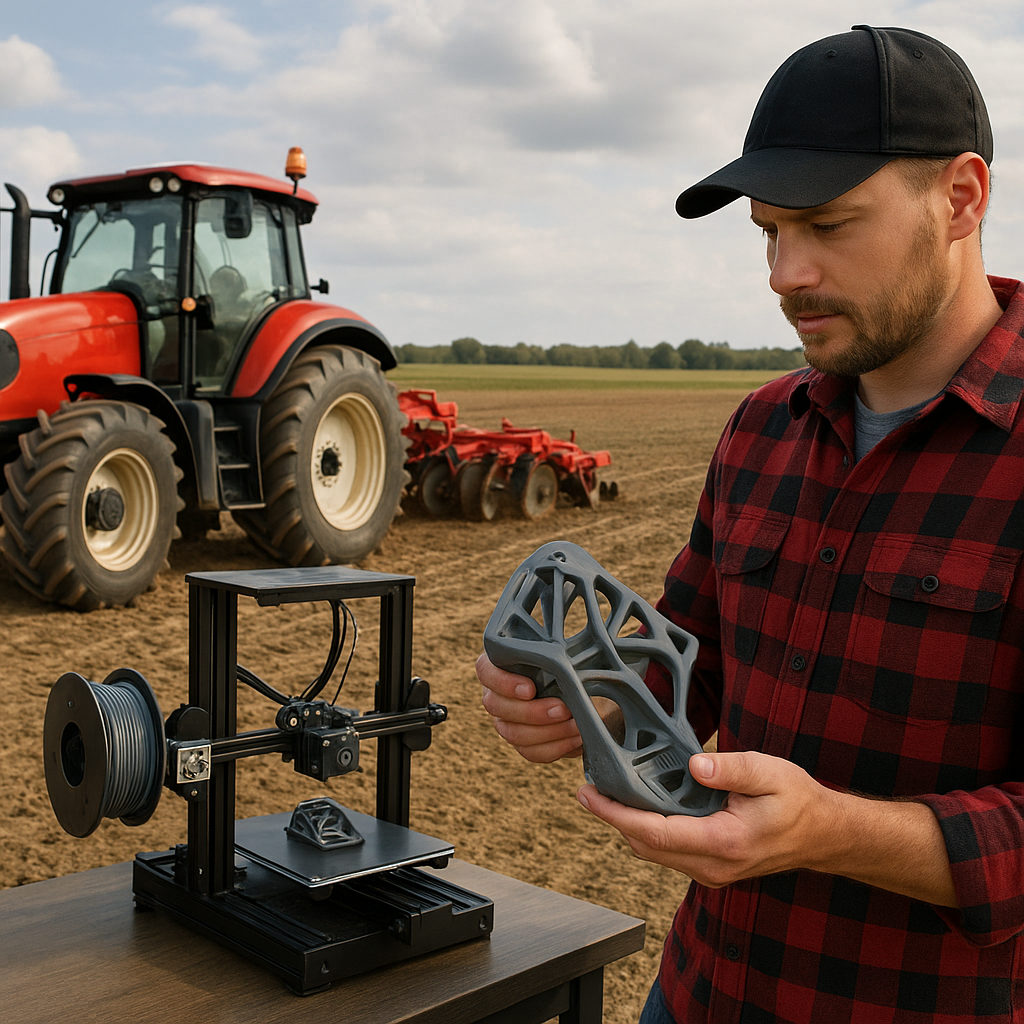
Innovations in **additive manufacturing** have begun to reshape the landscape of modern **agriculture**, offering farmers and equipment producers an unprecedented opportunity to enhance performance, reduce downtime, and tailor machinery to specific needs. As the integration of **3D printing** progresses, traditional supply chains are transforming to support more **resilient**, **sustainable**, and **cost-effective** operations.
The Rise of Additive Manufacturing in Agriculture
The concept of building three-dimensional objects layer by layer has moved from niche prototyping labs into the heart of large-scale **farm equipment** production. Initially embraced by aerospace and medical industries for its precision and speed, 3D printing now addresses key challenges in agriculture. The ability to produce replacement parts on-site, adapt tools for unique soil conditions, and experiment with novel **materials** has accelerated adoption across the sector.
Historically, farmers suffered from lengthy wait times for critical components such as hydraulic couplings, gear shafts, and specialized nozzles. Centralized manufacturing hubs, complex logistics, and limited inventories often meant equipment downtime stretching over days or weeks. Today, rural workshops and farmyards equipped with **additive manufacturing** platforms can reduce lead times dramatically, enabling on-demand production and immediate installation.
Advantages of 3D Printing for Farm Equipment
Several factors have fueled the growth of 3D printing in agricultural machinery:
- Customization: Each farm has unique soil types, microclimates, and crop requirements. 3D printing permits rapid design variations to optimize tines, blades, and planting mechanisms for local conditions.
- Rapid Prototyping: Engineers can iterate designs quickly, testing multiple geometries and materials in days rather than months. This leads to more **efficient** and resilient equipment.
- Reduced Inventory Costs: By shifting to digital inventories, manufacturers and distributors minimize the storage of rarely demanded components, lowering overhead expenses.
- On-Demand Production: Farmers can print spare parts in remote locations, reducing reliance on external suppliers and shortening supply chains.
- Lightweight Construction: Novel lattice structures and composite materials deliver strong yet lightweight parts, improving fuel efficiency and lowering soil compaction.
- Complex Geometries: Traditional machining often struggles with intricate internal channels or optimized air-flow passages. 3D printing solves these issues directly.
Customization and Rapid Prototyping
In the past, modifying a plow share or adjusting the wear strip on a cultivator required manual welding or ordering specialized tools. Now, digital design software allows quick adjustments to fit changing field conditions. A farmer encountering unusually rocky terrain can adjust blade angles and reinforce stress points, then print the new part overnight. This level of **flexibility** empowers small-scale operators and large producers alike to innovate from the ground up.
Supply Chain Resilience
Global disruptions—from trade disputes to natural disasters—have exposed vulnerabilities in traditional manufacturing. By deploying desktop and industrial-scale printers, rural communities can maintain critical operations independently. Cooperative networks of farmers share design files for outdated parts, preserving decades-old equipment that might otherwise be scrapped. This collaborative approach promotes **sustainability** by extending machinery lifespans and reducing e-waste.
Materials and Technologies Driving Change
Advances in polymer, metal, and composite materials have broadened the scope of what can be printed. Commonly used materials include:
- High-Performance Polymers: Nylon, polycarbonate, and PEEK offer impressive strength-to-weight ratios and resistance to UV, chemicals, and abrasion.
- Metal Alloys: Stainless steel, aluminum, and titanium powders enable the fabrication of load-bearing components such as gears, brackets, and hydraulic fittings.
- Composite Filaments: Carbon-fiber and glass-filled filaments enhance rigidity while keeping weight low, ideal for combine headers and lightweight attachments.
- Biodegradable and Bio-Based Resins: Emerging options derived from plant oils and starches contribute to eco-friendly production cycles.
Printer technologies also vary by scale and function. Fused Deposition Modeling (FDM) machines dominate farm workshops for small parts and plastic prototypes. For more **precision**, Selective Laser Melting (SLM) and Direct Metal Laser Sintering (DMLS) produce fine-tolerance metal pieces. Binder Jetting and Stereolithography (SLA) find niches in casting molds and high-detail resin parts for sensor housings and electronics enclosures.
Challenges and Future Prospects
While the trajectory is promising, several obstacles remain:
- Regulatory Standards: Agricultural equipment must meet rigorous safety and performance certifications. Developing standards for 3D-printed parts will require collaboration between manufacturers, regulators, and research institutions.
- Material Certification: Ensuring consistent mechanical properties in printed metal and polymer parts is critical. Variations in powder quality, layer adhesion, and post-processing can impact durability.
- Scalability: Printing large frames or structural components remains time-consuming and expensive compared to traditional fabrication techniques.
- Training and Expertise: Effective design for additive manufacturing demands specialized skills in CAD, topology optimization, and process parameters. Expanding the workforce’s capabilities is essential.
Looking ahead, the convergence of 3D printing with robotics, artificial intelligence, and sensor networks will further streamline **manufacturing** workflows. Automated print farms on-site could operate around the clock, producing everything from replacement parts to fully assembled modular attachments. AI-driven design software will propose optimized geometries for every component, minimizing material use while maximizing performance.
Emerging Trends:
- Distributed Manufacturing Networks: Farmers and equipment dealers will share digital part libraries through secure cloud platforms, enabling peer-to-peer production and collective innovation.
- Smart Materials: Shape-memory alloys and conductive polymers could give rise to self-healing or sensor-integrated parts that monitor wear and alert users before failure.
- Localized Supply Chains: Regional hubs equipped with large-format printers will serve cluster communities, reducing carbon footprints and supporting local economies.
By embracing additive technologies, the agricultural industry stands to gain improved **efficiency**, reduced environmental impact, and a newfound capacity for rapid adaptation. As equipment manufacturers and farmers collaborate on digital designs, the boundaries of what’s possible on the modern farm will continue to expand, sowing the seeds for a more innovative and resilient future.