Livestock monitoring has undergone a significant transformation as wearable technology finds its place in the fields and barns of contemporary farms. By equipping animals with lightweight, nonintrusive devices, farmers can access a wealth of data that enhances health management, improves productivity, and promotes sustainability. This article explores how sensors, connectivity, and advanced analytics converge to create a new paradigm in precision livestock farming.
Advantages of Wearable Technology in Livestock Farming
The integration of wearables into everyday farm routines delivers numerous benefits:
- Real-time Monitoring – Continuous tracking of vital signs, activity levels, and location empowers swift intervention when anomalies arise.
- Early Disease Detection – Subtle shifts in temperature or movement patterns can signal the onset of illness before visible symptoms appear.
- Enhanced Welfare – By reducing the need for manual checks, animals experience less stress, and farmers can prioritize rest and recovery.
- Optimized Feeding Strategies – Detecting grazing behavior and rumination leads to tailored nutrition plans, cutting feed waste and boosting growth rates.
- Improved Reproductive Management – Monitoring estrus cycles via motion sensors and temperature changes raises calving success and shortens intervals between pregnancies.
- Labor Efficiency – Automated alerts free up human resources for value-added tasks, driving overall efficiency on the farm.
Key Technologies and Devices
A variety of hardware and software components work together to enable robust livestock monitoring systems:
Sensor Types
- Accelerometers – Measure movement, posture, and activity intensity to detect lameness or restlessness.
- Temperature Probes – Track core or skin temperature fluctuations that may indicate fever or heat stress.
- GPS Modules – Provide geolocation data for free-range herds, helping prevent straying and facilitating pasture rotation.
- Heart Rate Monitors – Capture cardiovascular metrics for high-value breeding stock or animals under stress.
- RFID and NFC Tags – Offer quick identification at checkpoints, automating attendance and weight-record logging.
Connectivity Solutions
Robust data transmission is crucial in remote farm settings:
- LoRaWAN – Low-power, long-range networks suitable for wide-open pastures.
- Cellular LTE/5G – Provides higher bandwidth for richer data streams, including audio and video.
- Satellite Links – Ideal for very remote regions where terrestrial networks are absent.
- Wi-Fi Mesh – Supports devices in dense barn environments, creating seamless local networks.
Data Analytics Platforms
Collecting data is only the first step; extracting actionable insights depends on:
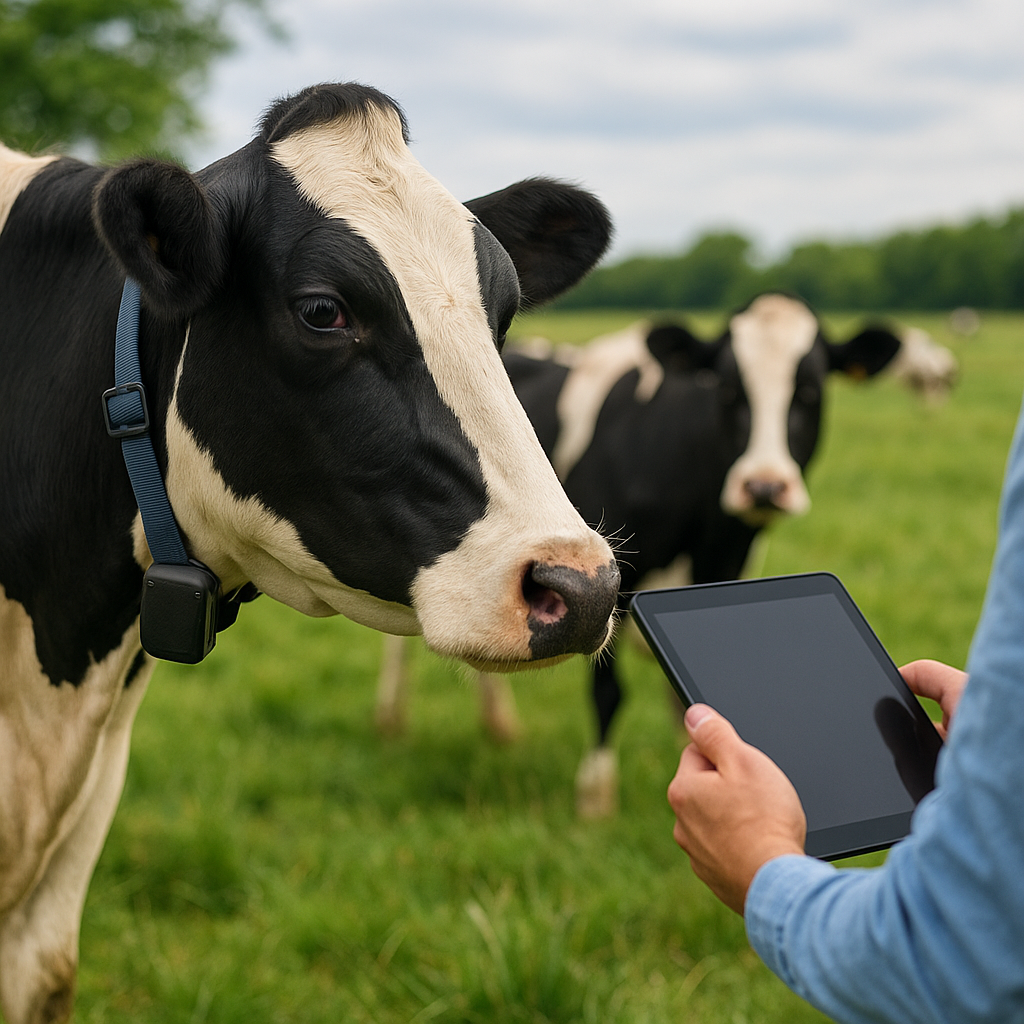
- Cloud-based Dashboards – Aggregate metrics in intuitive interfaces, accessible via smartphones or tablets.
- Machine Learning Models – Analyze patterns to forecast disease outbreaks or optimal breeding windows.
- Alerts and Notifications – Instant SMS, email, or push messages when predefined thresholds are crossed.
- Historical Reporting – Trend analysis over weeks or months to refine management protocols.
Implementation Challenges and Solutions
Despite its promise, deploying wearable systems in livestock operations presents obstacles:
- Device Durability – Harsh conditions demand rugged enclosures; waterproofing and impact resistance are critical.
- Battery Life – Frequent recharging can disrupt sensor data continuity; solar-powered attachments or energy-harvesting designs extend uptime.
- Data Overload – Too many alerts can overwhelm farm staff; customizable thresholds and prioritized notifications help manage information flow.
- Integration with Legacy Systems – Many farms rely on traditional record-keeping; middleware solutions ensure seamless data exchange.
- Animal Comfort – Bulky or poorly fitted wearables can cause chafing; ergonomic designs and flexible materials maintain welfare standards.
- Cost Considerations – Initial investment can be high; however, ROI calculations often reveal long-term savings through reduced veterinary bills and improved yield.
Case Studies Demonstrating Impact
Real-world examples illustrate the benefits of wearable livestock monitoring:
Dairy Farm in Wisconsin, USA
Over 500 Holstein cows were fitted with neck-mounted collars featuring accelerometers and temperature sensors. Within two months:
- Mastitis cases dropped by 30%, as early signs of inflammation were flagged automatically.
- Milk yield increased by 5%, attributed to optimized feeding based on individual activity data.
- Veterinary costs decreased by 20%, owing to fewer emergency visits and targeted treatments.
Beef Ranch in Queensland, Australia
A large-scale, free-range operation deployed GPS-enabled ear tags on 2,000 cattle. Key outcomes included:
- Reduction in lost animals by 90%, thanks to geofencing alerts when animals approached fences or waders.
- Improved pasture utilization, with data-driven rotation schedules boosting forage regrowth.
- Enhanced biosecurity during drought conditions, enabling remote health assessments.
Sheep Farm in Scotland
Collars equipped with heart rate and movement sensors provided insights on lambing readiness:
- Labor requirements for lambing seasons dropped by 40%, as staff received alarms when ewes entered active labor.
- Neonatal mortality rates decreased by 15% due to quicker assistance during birthing complications.
- Overall flock health management became more data-driven, paving the way for selective breeding improvements.
Future Directions in Precision Livestock Farming
The synergy between wearables and emerging technologies points to further innovations:
- Edge Computing – Processing data on-device to reduce latency and preserve bandwidth.
- Blockchain Integration – Ensuring transparent, tamper-proof records for animal traceability and food safety.
- Augmented Reality Interfaces – Enabling technicians to visualize real-time health metrics through smart glasses during field inspections.
- Genomic Data Fusion – Combining sensor data with genetic profiles to accelerate breeding for disease resistance.
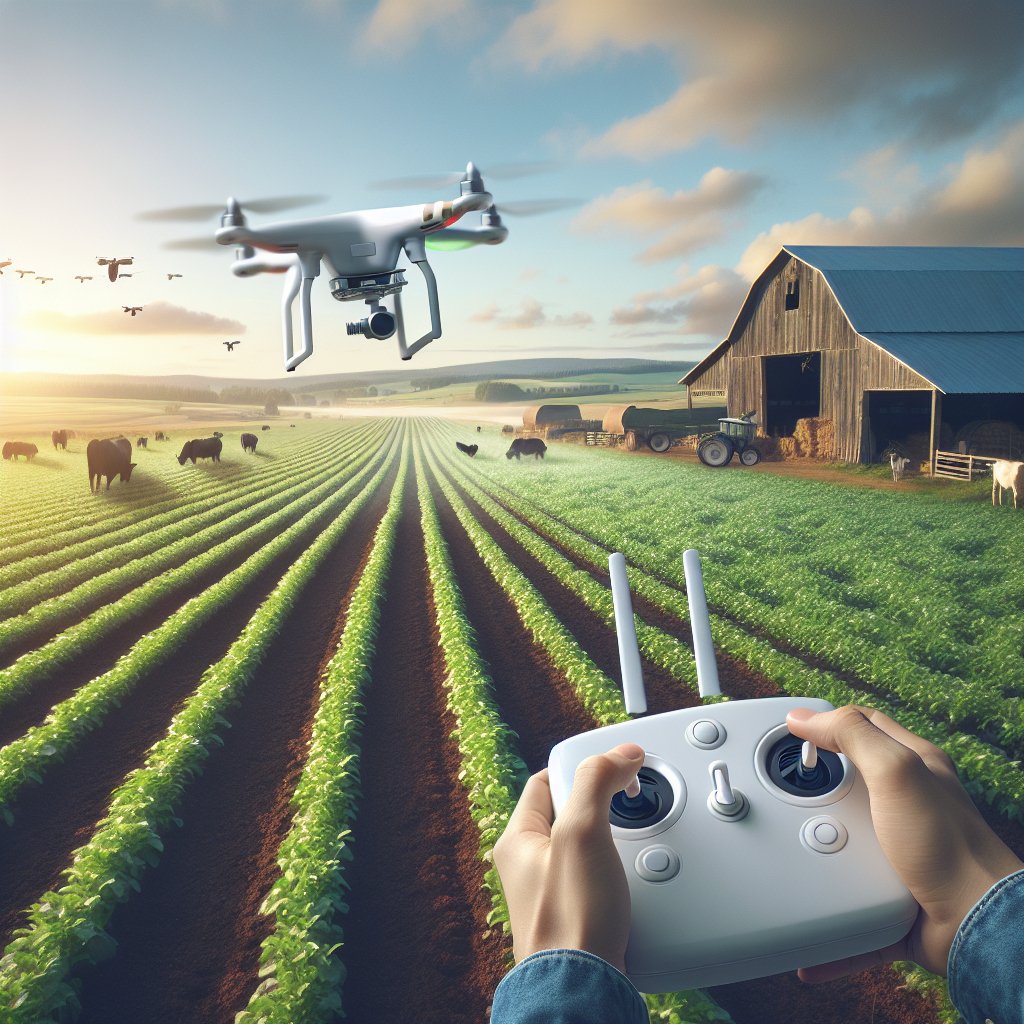
- Automated Robotics – Coordinating drones or autonomous vehicles to deliver targeted treatment or supplemental feed based on wearable insights.
The ongoing evolution of sensor hardware, network infrastructure, and predictive analytics promises to propel livestock farming into a new era of precision and profitability.