In the realm of modern horticulture, the fusion of advanced technologies and traditional farming methods has paved the way for innovative solutions that optimize plant growth, resource utilization, and environmental impact. Smart greenhouses with climate control automation represent a paradigm shift in agricultural production, offering growers unprecedented **efficiency**, precise **resource management**, and enhanced **crop quality**. By leveraging an interconnected network of sensors, actuators, and data analytics, these systems can maintain ideal growing conditions while minimizing labor and energy costs. This article delves into the core technologies, components, benefits, and future prospects of climate-controlled smart greenhouses in the agricultural sector.
Advancements in Smart Greenhouse Technology
The convergence of **Internet of Things** (IoT), artificial intelligence (AI), and renewable energy solutions has driven rapid progress in greenhouse automation. Over the past decade, researchers and commercial developers have refined systems that dynamically adjust environmental parameters such as temperature, humidity, CO2 concentration, and light intensity. Key technological milestones include:
- Wireless Sensor Networks: Miniaturized, low-power sensors monitor soil moisture, leaf temperature, ambient light, and atmospheric gases, transmitting data in real time to cloud-based platforms.
- Machine Learning Algorithms: Predictive models analyze historical and current data to forecast plant needs, disease risks, and optimal harvest times, enabling proactive adjustments.
- Automated Actuators: Precision valves, fans, heaters, and shading devices respond instantly to control signals, ensuring minimal deviation from target conditions.
- Renewable Energy Integration: Solar panels, geothermal systems, and biomass boilers provide sustainable power and heating, reducing carbon footprint and operational costs.
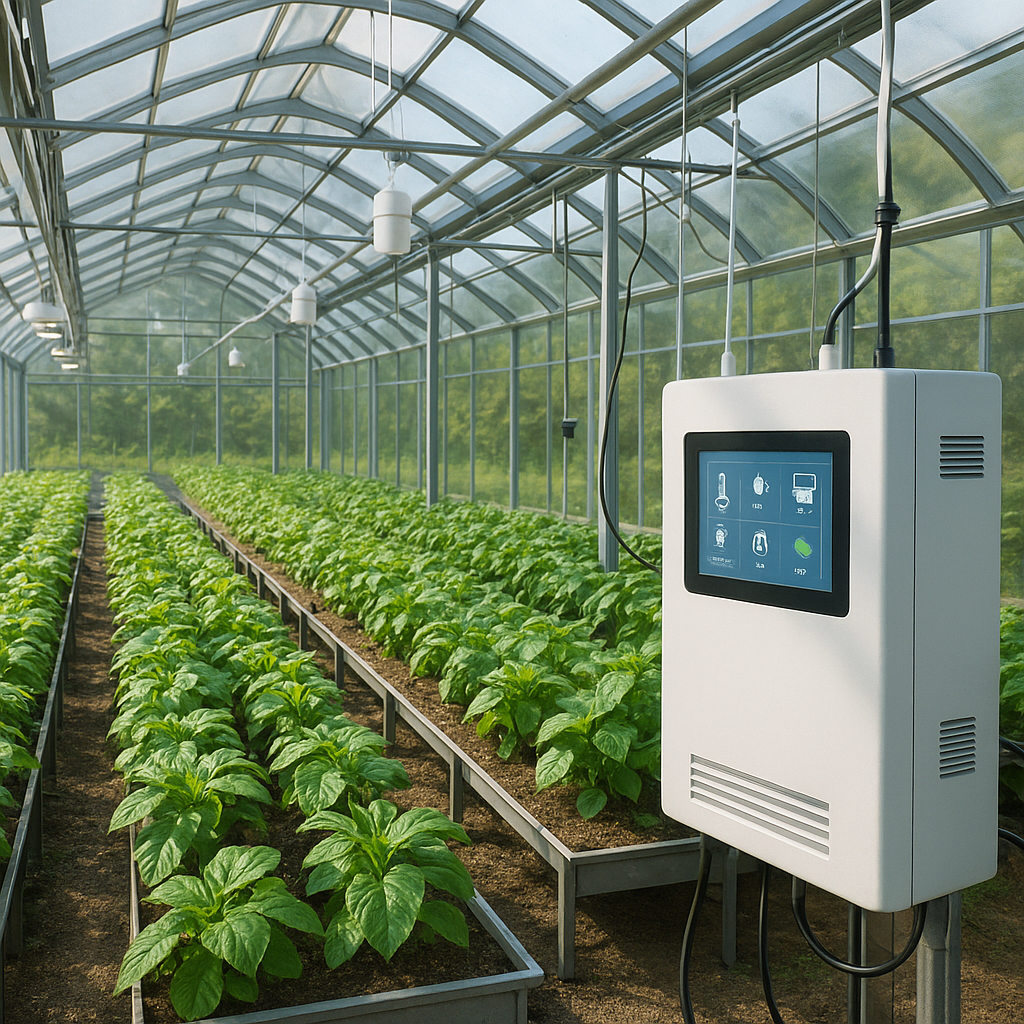
- Remote Monitoring and Control: Mobile applications and web dashboards allow growers to view real-time metrics and issue manual overrides from any location with an internet connection.
These advancements underscore the continuous drive toward more **resilient**, adaptable, and high-performance greenhouse environments.
Key Components of Climate Control Automation
To achieve optimal plant performance, a smart greenhouse relies on several interconnected components. Each unit works in concert to maintain a delicate balance among environmental factors, ensuring that crops receive exactly what they require for robust growth.
Sensors and Data Acquisition
- Temperature and Humidity Sensors: Provide precise readings at multiple points within the greenhouse to avoid microclimates that can stress plants.
- Soil Moisture and Nutrient Probes: Measure water content and pH levels, facilitating accurate irrigation schedules and fertilizer dosing.
- CO2 Monitors: Track carbon dioxide concentration, enabling supplemental CO2 enrichment to accelerate photosynthesis.
- Light Intensity and Quality Sensors: Detect both natural sunlight and artificial lighting output to adjust shading screens or LED grow lights as needed.
Control Systems and Software Platforms
- Programmable Logic Controllers (PLCs): Industrial-grade units that execute control logic by processing sensor data and sending commands to actuators.
- Supervisory Control and Data Acquisition (SCADA): Centralized systems that log data, generate alerts, and visualize trends, enhancing decision-making capabilities.
- Cloud-based Analytics: Employ AI-driven insights to recommend adjustments, predict equipment failures, and optimize scheduling for maintenance tasks.
- Mobile and Web Interfaces: Provide intuitive dashboards for monitoring greenhouse status, viewing historical performance, and customizing control parameters.
Actuation and Environmental Regulation
- Heating and Cooling Units: Efficient heat exchangers, heat pumps, and evaporative cooling pads maintain target temperatures across variable external climates.
- Ventilation and Airflow Management: Automatically controlled vents, exhaust fans, and circulation systems prevent hotspots and ensure uniform air distribution.
- Irrigation and Fertigation Systems: Drip lines, sprinklers, and hydroponic channels deliver water and nutrients precisely when and where plants need them.
- Lighting Control: LED fixtures with programmable spectra and intensity settings adapt to growth stages, supplementing or replacing natural light.
Benefits of Automated Greenhouses
Adopting climate control automation in greenhouse operations yields a host of **economic**, **environmental**, and **social** benefits. Below are some of the most significant advantages:
- Enhanced Productivity: Continuous monitoring and rapid response to changing conditions maximize photosynthetic efficiency and crop yield per square meter.
- Water Conservation: Precision irrigation minimizes waste, reducing overall water usage by up to 70% compared to open-field cultivation.
- Energy Savings: Integration with renewable energy sources and demand-driven heating/cooling cycles lowers utility bills and greenhouse gas emissions.
- Pest and Disease Management: Early detection via environmental and plant health sensors enables targeted interventions, reducing pesticide application.
- Labor Optimization: Automation of repetitive tasks such as irrigation, climate regulation, and data collection frees personnel to focus on strategic planning and quality control.
- Year-Round Production: Controlled environments decouple crop cycles from seasonal constraints, ensuring consistent supply and stable market prices.
- Traceability and Compliance: Detailed logs of environmental conditions and inputs support certification programs, food safety audits, and consumer transparency.
Challenges and Future Prospects
While the promise of smart greenhouses is substantial, growers and technology providers must navigate several hurdles to achieve widespread adoption and sustained success.
Initial Investment and ROI
The capital cost of installing **advanced sensors**, high-efficiency HVAC systems, and AI-driven control platforms can be a barrier for small and mid-sized operations. However, declining component prices, leasing options, and government subsidies are making automation more accessible. Long-term return on investment often outweighs upfront expenditures through increased yield, reduced input costs, and premium produce quality.
Data Integration and Interoperability
A fragmented landscape of proprietary protocols and device standards can impede seamless data exchange across different equipment brands. Industry consortia and open protocols aim to standardize communication layers, enabling plug-and-play integration and more robust system scalability.
Cybersecurity and Reliability
Connected devices introduce new vectors for cyberattacks that could disrupt greenhouse operations. Implementing secure authentication, encrypted data transmission, and regular firmware updates is essential to protect system integrity and avoid costly downtime.
Artificial Intelligence and Predictive Farming
Future developments will leverage advanced machine learning and computer vision to interpret plant morphology, detect nutrient deficiencies, and diagnose diseases before visual symptoms appear. Real-time image analysis, robotic interventions, and automated harvesting are on the horizon, further reducing labor costs and enhancing precision in every aspect of greenhouse management.
Sustainability and Circular Economy
Smart greenhouses are increasingly designed to operate within a circular economy framework. Rainwater harvesting, nutrient recycling, and waste-to-energy systems will become standard features, closing resource loops and minimizing environmental footprints. As regulations tighten around water usage and emissions, these sustainable practices will shift from optional enhancements to mandatory requirements.
By marrying **innovation** with **sustainable practices**, climate-controlled smart greenhouses are set to play a pivotal role in feeding a growing global population while preserving the planet’s resources. As technology costs decrease and interoperability improves, more agricultural enterprises will embrace these automated systems, transforming the future of food production and horticultural research.