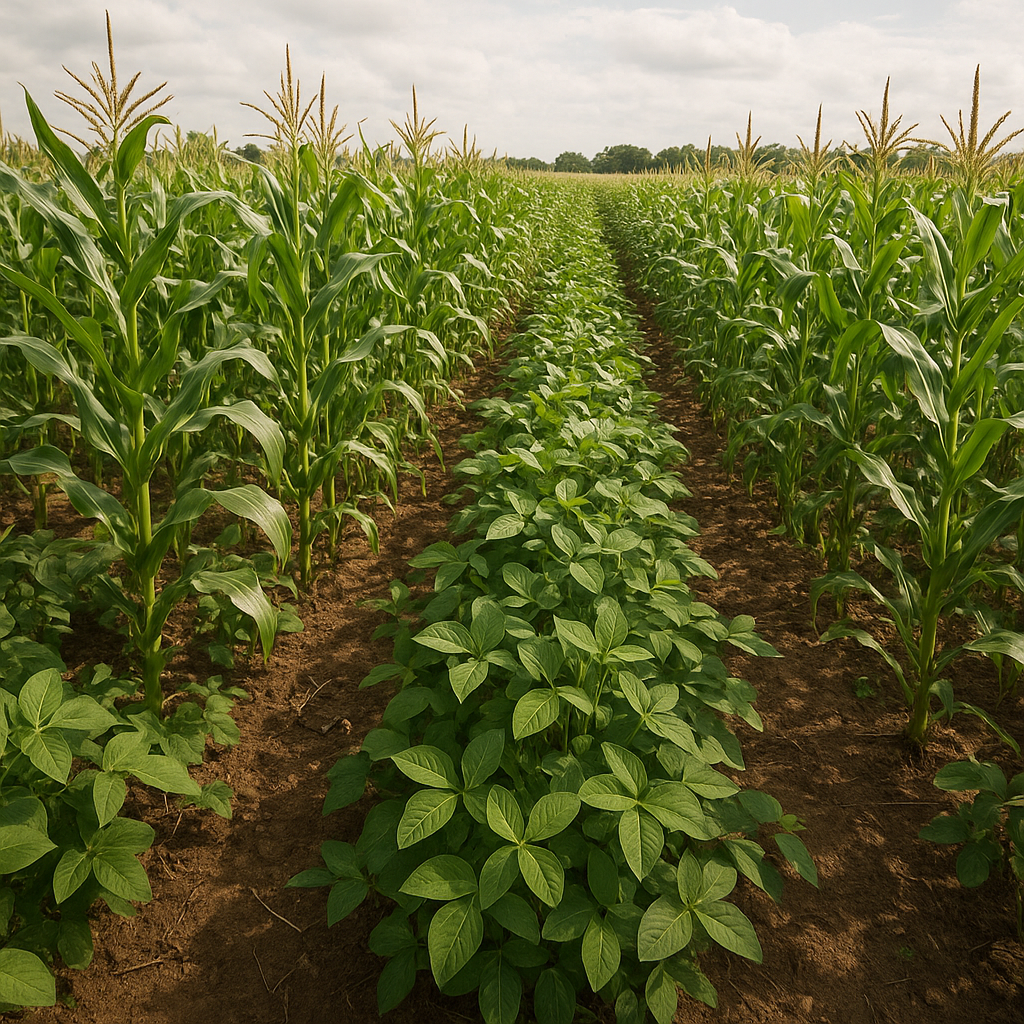
Intercropping systems represent a time-honored agricultural practice that integrates two or more crops on the same field simultaneously. This method leverages complementary plant traits to enhance productivity, resource use, and ecological balance. Farmers worldwide are increasingly adopting these systems to achieve more sustainable and resilient food production amid changing climate patterns and growing environmental concerns.
Resource Use Efficiency and Complementarity
One of the primary benefits of intercropping lies in its ability to optimize the capture and use of essential resources. When crops with different rooting depths, canopy structures, and nutrient requirements are grown together, they utilize sunlight, water, and soil nutrients more effectively than monocultures. The practice stimulates nutrient cycling and reduces competition, allowing each species to access resources that might otherwise go underutilized.
- Water efficiency: Deep-rooted and shallow-rooted plants can access moisture from different soil layers, improving overall water uptake.
- Light interception: Varying leaf angles and growth heights minimize shading losses and maximize photosynthesis rates.
- Polyculture dynamics: By combining cereals with legumes or root crops with leafy greens, farmers can create a synergistic effect that boosts biomass.
Through these mechanisms, intercropping strengthens farm-level sustainability and reduces the need for external inputs such as irrigation and synthetic fertilizers.
Enhanced Pest and Disease Management
A diverse crop canopy disrupts the lifecycle of pests and pathogens. Intercropping systems introduce physical and chemical barriers that limit pest movement, reduce host plant density, and dilute pathogen spread. This natural form of pest management lowers dependence on chemical pesticides, benefiting both the ecosystem and human health.
- Trap cropping: Planting a sacrificial species that lures pests away from the main crop.
- Biodiversity support: Predatory insects and beneficial microbes find shelter in a varied crop environment.
- Allelopathy: Certain plants release natural compounds that inhibit weed germination and fungal growth.
By fostering a balance of organisms, integrated pest management in intercropping systems can reduce crop losses and input costs, while maintaining yield stability.
Improved Soil Health and Fertility
Soil degradation is a pressing concern for modern agriculture. Intercropping can counteract nutrient depletion and erosion through enhanced root biomass and organic matter input. Legumes, for instance, fix atmospheric nitrogen into the soil, benefiting neighboring cereals or vegetables. This nutrient cycling mechanism builds long-term soil fertility without heavy reliance on synthetic fertilizers.
- Root diversity: Varying root architectures improve soil structure and porosity.
- Cover and mulch effect: A continuous canopy reduces surface evaporation and protects against soil crusting.
- Carbon sequestration: Increased biomass leads to higher organic carbon levels in topsoil.
These changes promote robust soil health and foster a living soil ecosystem that supports sustainable crop production.
Yield Stability and Economic Benefits
While monocultures may deliver high yields under optimal conditions, they are vulnerable to climatic extremes and market fluctuations. Intercropping spreads risk by combining high-value crops with staple species. If one fails due to drought or disease, the other may thrive. This strategy enhances farm-level resilience and economic viability.
- Risk diversification: Multiple income streams from different crops buffer against price drops and crop failure.
- Continuous harvest: Staggered planting and maturity times ensure a steady supply of produce.
- Profitability: Improved resource efficiency and lower input costs translate into higher net returns.
Studies show that intercropping can increase overall yield by 10–30% compared to single-crop systems, depending on species combination and management practices.
Environmental Resilience and Climate Adaptation
Climate change poses significant challenges to global food security. Intercropping systems bolster environmental resilience by creating microclimates that buffer crops against temperature extremes and moisture stress. Diverse canopies reduce soil surface temperatures and conserve moisture, while varied root depths enhance drought tolerance.
- Microclimate regulation: Shade provided by taller crops moderates heat stress for understory species.
- Flood mitigation: Dense root mats improve water infiltration and reduce runoff.
- Pest suppression under changing climates: A diverse agroecosystem is less likely to experience pest outbreaks fueled by warmer conditions.
By fostering adaptive capacity, these systems serve as an integral component of climate-smart agriculture and long-term resource stewardship.
Implementing Best Practices
Successful intercropping demands careful planning and management. Farmers must select compatible crop species, determine optimal planting densities, and adjust nutrient and irrigation regimes. Experimentation on a small scale allows for local adaptation and refinement of techniques.
Species Selection
- Complementary rooting systems: Pair deep-rooted legumes with shallow-rooted cereals.
- Growth habit compatibility: Combine erect and spreading plants to maximize space use.
- Market considerations: Balance high-value niche crops with staples for food security.
Spatial and Temporal Arrangements
- Row intercropping: Alternating strips of two or more crops for machinery compatibility.
- Relay intercropping: Staggered planting dates ensure overlapping growth phases without competition peaks.
- Mixed sowing: Broadcasting seeds of multiple species together for labor-efficient establishment.
Maintaining field records and monitoring performance metrics is crucial. Farmers should track yields, input use, and pest incidence to refine their approach over seasons.
Conclusion
Intercropping systems unlock a suite of benefits that contribute to more sustainable, productive, and resilient agriculture. Through enhanced biodiversity, efficient resource use, and improved ecosystem services, these practices offer a path toward meeting global food demands while preserving environmental integrity. As challenges intensify, the adoption of intercropping represents a powerful strategy for farmers seeking to balance productivity with stewardship.