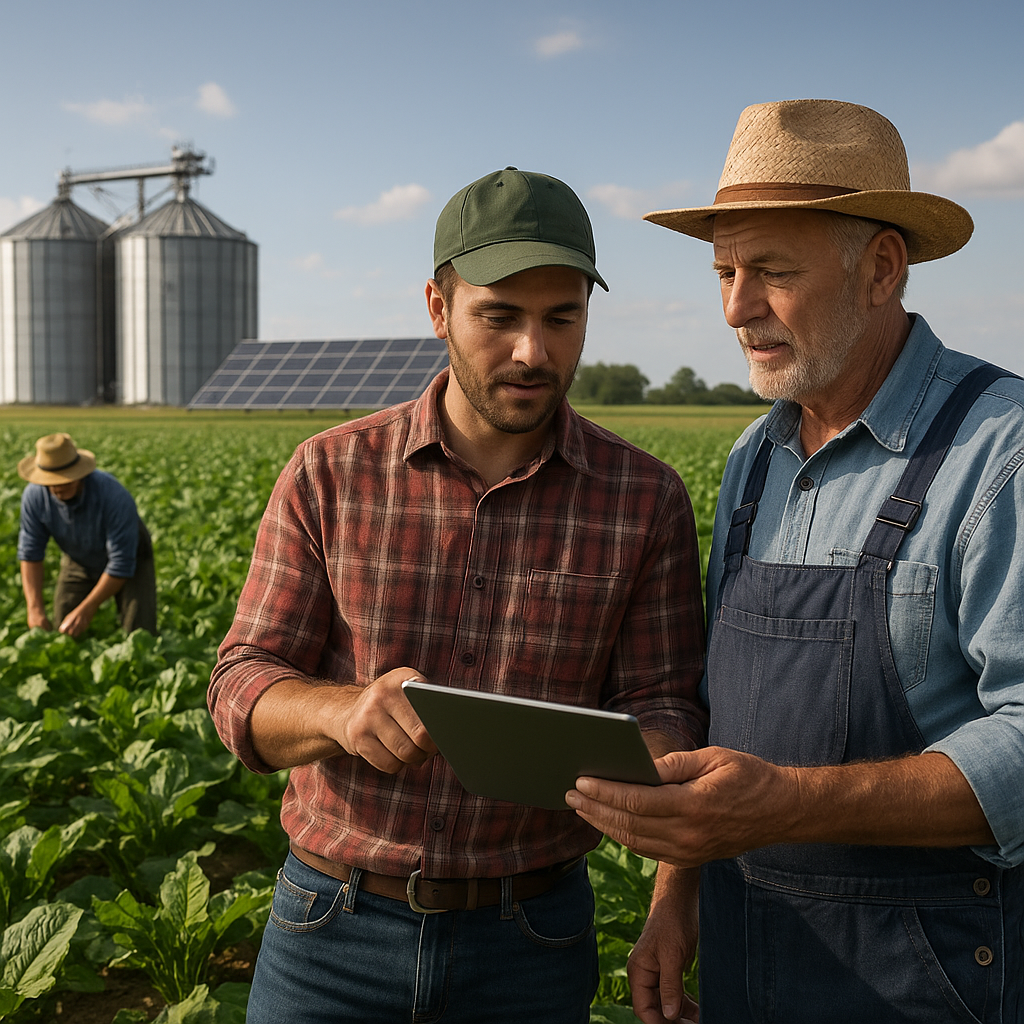
Across diverse agroecosystems, machine learning has emerged as a transformative tool to forecast pest populations before they wreak havoc on vital crop yield. By harnessing vast arrays of data—from satellite imagery and weather stations to on-the-ground sensors and historical records—researchers and farmers can deploy predictive models that flag early warning signs of infestations. This proactive stance not only minimizes economic losses but also promotes sustainable agriculture by reducing unnecessary chemical applications and preserving ecosystem health.
Integrating Data Sources for Pest Prediction
Achieving reliable forecasts requires the fusion of multiple data streams. Each source contributes unique insights into the environmental conditions that influence pest dynamics:
- Weather Data: Temperature, humidity, rainfall patterns, and wind speed serve as primary indicators of pest breeding cycles and migration routes.
- Remote Sensing: High-resolution satellite imagery and drones generate detailed maps of vegetation health, soil moisture, and land use changes.
- Soil Sensors: In situ probes measure nutrient levels, pH, and moisture content, offering clues about plant stress that can attract certain pests.
- Historical Outbreak Records: Archive databases track previous infestations, enabling time-series analyses and identification of recurring patterns.
- On-Farm Observations: Mobile apps and crowd-sourced platforms allow farmers to log sightings of eggs, larvae, or adult insects, enriching real-time situational awareness.
Combining these sources within a centralized platform facilitates comprehensive feature sets for scalable model training and continuous monitoring.
Machine Learning Models in Pest Forecasting
Various algorithms can process the integrated dataset to predict outbreak risks. Below are commonly employed approaches:
Supervised Learning Techniques
- Random Forest: An ensemble of decision trees that handles non-linear relationships and ranks the importance of input variables, such as temperature anomalies or vegetation indices.
- Support Vector Machines (SVM): Effective for classification tasks, distinguishing low-risk from high-risk zones based on environmental metrics.
- Gradient Boosting Machines: Algorithms like XGBoost or LightGBM excel at capturing subtle interactions in data, leading to high-precision predictions on outbreak timing.
Deep Learning Architectures
- Convolutional Neural Networks (CNN): Ideal for processing imagery, where spatial patterns in crop canopy or soil reflect pest hotspots.
- Recurrent Neural Networks (RNN) and LSTM modules: Designed for temporal sequences, these networks analyze time-series data—such as weekly temperature and pest counts—to forecast future infestation levels.
- Hybrid Models: Combining CNN outputs (e.g., vegetation stress maps) with LSTM layers enables simultaneous spatial and temporal forecasting.
Unsupervised and Semi-Supervised Approaches
In regions with incomplete labeling of past outbreaks, unsupervised clustering (e.g., K-means or DBSCAN) groups similar environmental conditions, hinting at potential risk clusters. Semi-supervised methods leverage small sets of labeled data alongside larger unlabeled pools, boosting model generalization in data-scarce environments.
Practical Applications and Case Studies
Numerous pilot projects and large-scale deployments illustrate the power of data-driven pest management:
- Cotton Bollworm in North America: By integrating ground sensor feeds with monthly weather forecasts, a hybrid random forest–LSTM model achieved 85% accuracy in predicting peak larval emergence, enabling targeted insecticide application and a 30% reduction in chemical use.
- Desert Locust Monitoring in East Africa: Satellite-derived vegetation indices fed into a gradient boosting model provided early alerts of breeding grounds during rainy seasons, guiding aerial spraying campaigns and protecting over 1 million hectares of cropland.
- Rice Planthopper in Southeast Asia: Farmers used a smartphone app to upload geo-referenced images of damaged leaves. A CNN classifier flagged high-risk fields, triggering timely biological control releases and minimizing yield losses by up to 20%.
- European Grapevine Moth: Unsupervised analysis of trap counts and vineyard microclimate data identified subtle outbreak precursors, allowing vintners to optimize pheromone trap placement and reduce grape spoilage.
Challenges and Future Directions
Despite promising results, several obstacles must be addressed to scale predictive systems globally:
- Data Quality and Availability: Gaps in sensor coverage and inconsistent reporting can lead to biased models. Establishing standardized data-sharing protocols is paramount.
- Model Interpretability: Farmers and agronomists often require transparent explanations for predictions. Integrating explainable AI techniques can foster trust and facilitate adoption.
- Scalability and Infrastructure: Deploying real-time analytics demands robust cloud platforms and reliable connectivity in remote regions, a hurdle for many developing countries.
- Climate Change Uncertainty: Shifting weather patterns may alter pest life cycles unpredictably. Adaptive learning algorithms that continuously retrain on new data are essential.
Looking forward, integrating IoT networks, edge computing on drones, and participatory sensing by farming communities will enrich data inputs. The fusion of AI-driven forecasts with precision agriculture implements—such as variable-rate sprayers—will usher in a new era of proactive, resource-efficient pest management.