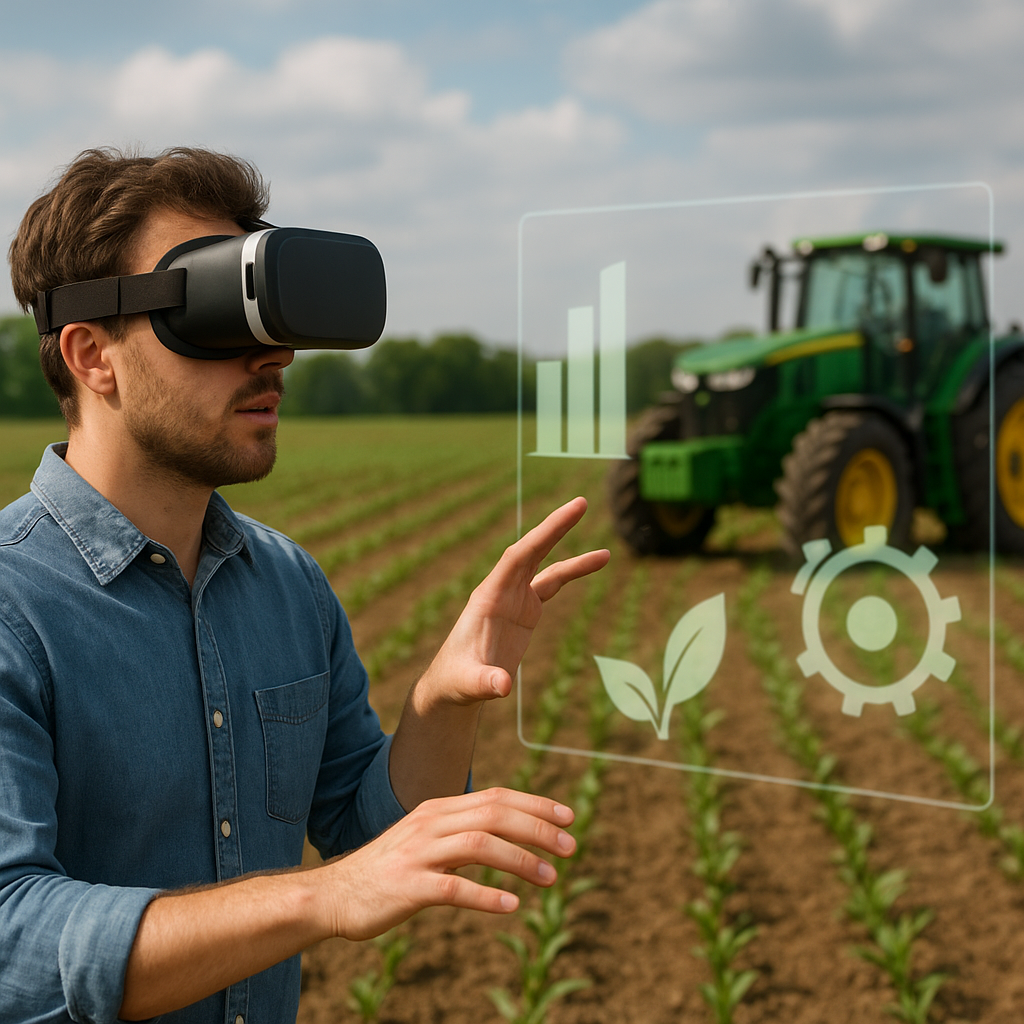
Agricultural education is undergoing a profound transformation as emerging technologies intersect with age-old farming traditions. Agri-Education Through Virtual Reality offers a pathway to equip students, researchers, and seasoned farmers with critical insights into soil management, crop health, and equipment operation without the constraints of geography or weather. With a blend of interactive modules and realistic field scenarios, VR-based learning environments foster innovation and hands-on skill development like never before.
Transforming Farm Education with VR Simulations
Traditional lectures and textbook diagrams can only convey so much. By contrast, risk-free environments created with Virtual Reality place learners directly in the middle of a simulated farm. From planting sequences to harvest time, each phase is rendered in immersive detail. These simulations leverage precision mapping of terrain and climate data, allowing users to experiment with different planting depths, irrigation schedules, and fertilizer applications.
Realistic Crop Management Scenarios
- Life-cycle observation: Monitor seeds from germination to maturity.
- Pest and disease control: Identify early-stage infestations and apply digital remedies.
- Soil analysis: Adjust pH and nutrient levels with real-time feedback.
By integrating analytics dashboards, learners receive instant performance metrics—crop yield predictions based on chosen interventions, resource consumption rates, and environmental impact assessments. This data-driven feedback loop accelerates comprehension of cause-and-effect relationships in agronomy.
Tractor and Machinery Operation
Operating heavy farm equipment safely demands practice and supervision. VR modules emulate cockpit controls, throttle response, and terrain challenges, all within a safe virtual workshop. Trainees refine coordination skills, learn troubleshooting techniques, and build confidence before setting foot on an actual tractor. The result is reduced training costs and fewer on-field accidents.
Immersive Learning Experiences for Modern Agriculturists
Beyond machinery and crop management, immersive VR platforms foster collaboration among international participants. Virtual field trips enable access to diverse biomes—rice paddies in Asia, vineyards in Europe, or desert farming trials in Africa—without travel expenses. Such exchanges cultivate cross-cultural knowledge sharing, encouraging sustainability practices tailored to local conditions.
Interactive Workshops and Peer Learning
- Multi-user classrooms: Engage in group problem solving on simulated farms.
- Live expert sessions: Receive guidance from agronomists via embedded voice chat.
- Virtual laboratories: Test soil chemistry, genetics, and hydroponic systems side by side.
Gamified challenges—like optimizing water usage in drought scenarios—spark friendly competition while reinforcing essential concepts. These experiences boost overall learner engagement and retention. The presence of avatars also mitigates the intimidation some students may feel in traditional lecture halls.
Tailored Modules for Diverse Roles
Whether training extension officers, farm managers, or horticulture students, VR platforms adapt content to varying skill levels. Beginners might explore basic crop cycles, whereas advanced users tackle complex precision agriculture tools, including drone flight paths, variable-rate seeding, and AI-based yield forecasting. Incorporating realtime telemetry from live farms further bridges the gap between simulation and reality.
Challenges and Future Prospects in Virtual Agriculture Training
Despite its promise, Virtual Reality adoption in agriculture faces hurdles. Initial hardware costs can deter small institutions, and high-quality content creation demands collaboration among agronomists, software developers, and 3D artists. Ensuring platform scalability and regular content updates also poses logistical and financial challenges.
Overcoming Technical and Economic Barriers
Initiatives to open-source VR lesson plans and partner with agritech firms aim to reduce development expenses. Subsidies and grant programs support the procurement of headsets and motion controllers for rural schools. Meanwhile, cloud streaming solutions alleviate the need for powerful local machines, improving connectivity across remote regions.
Next-Generation Innovations
Looking ahead, the integration of augmented reality overlays could assist farmers in live field operations—projecting soil moisture levels directly onto visible crops. Haptic feedback suits may deliver tactile sensations of plowing resistance or the weight of produce during harvest simulations. As machine learning algorithms digest accumulated learning data, VR systems will deliver even more personalized training paths, adapting in real time to each user’s strengths and weaknesses.
The fusion of virtual environments with precision agriculture holds the potential to accelerate global food security efforts. By empowering the next generation of agriculturists with cost-effective, scalable, and immersive training tools, the sector can address labor shortages, climate challenges, and the need for continuous innovation in cultivation methods.