The rapid advancement of technology has transformed modern farming practices, empowering growers with tools to optimize productivity and sustainability. Among these innovations, Internet of Things (IoT)-enabled weather prediction stands out as a game-changer, equipping farmers with detailed, localized forecasts and real-time data. By strategically deploying sensors across fields and integrating them with powerful analytics platforms, agricultural enterprises can anticipate climatic fluctuations, mitigate risks, and enhance decision-making. This article explores the architecture, data processing techniques, and tangible benefits of IoT-driven weather forecasting in the agricultural sector.
Integrating IoT Sensors in Agricultural Fields
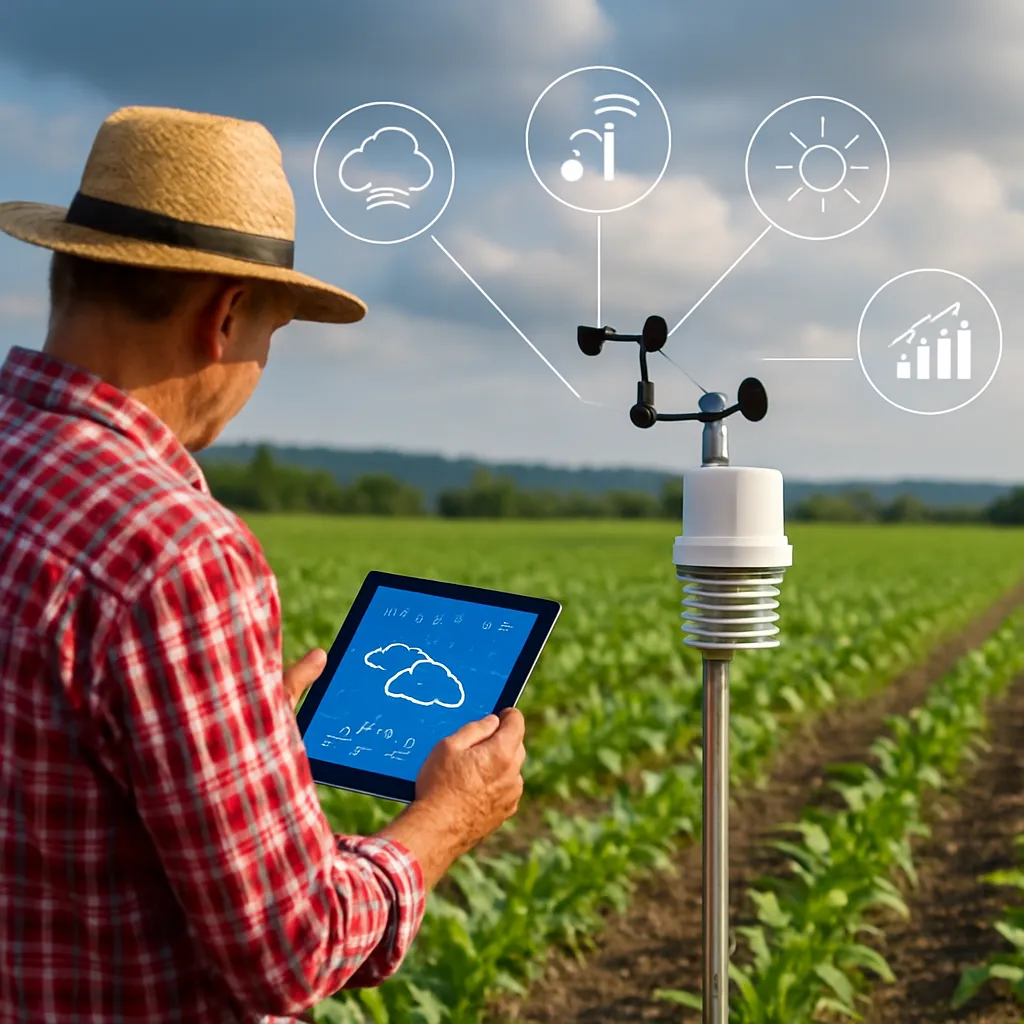
Successful implementation of IoT-based weather prediction begins with the installation of a network of environmental sensors. These devices measure critical variables such as temperature, humidity, atmospheric pressure, solar radiation, and wind speed. Strategically placed at different elevations and microclimates, they capture granular data, reflecting field-specific conditions rather than relying on generalized regional forecasts. Key components include:
- Soil moisture probes that assess the volumetric water content, helping calibrate irrigation schedules.
- Wireless weather stations with integrated barometers and anemometers for continuous data transmission.
- Edge computing modules enabling preliminary data filtering and compression before cloud upload.
Connectivity solutions range from LoRaWAN and NB-IoT to cellular networks, selected based on farm size and coverage requirements. Once installed, these real-time monitoring units transmit sensor readings to centralized servers, where they feed advanced weather models.
Data Analytics and Machine Learning for Weather Forecasting
Raw sensor data by itself has limited value until processed through robust data analytics pipelines. The typical workflow involves data cleansing, normalization, and anomaly detection to correct sensor errors or artifacts. After preprocessing, the refined dataset enters predictive models powered by machine learning and statistical algorithms:
- Time series forecasting techniques such as ARIMA and Prophet for short-term predictions of temperature and rainfall.
- Ensemble learning methods, including Random Forests and Gradient Boosting Trees, to improve forecast accuracy by combining multiple models.
- Deep learning architectures like Long Short-Term Memory (LSTM) networks that capture complex temporal dependencies and seasonal trends.
By blending historical climate records, satellite imagery, and in-situ sensor feeds, these models generate hyperlocal forecasts at hourly or sub-hourly intervals. Outputs include predicted rainfall intensity, probable frost events, and evapotranspiration rates. Farmers access these insights via intuitive dashboards or mobile apps, receiving alerts for imminent weather threats.
Benefits and Challenges for Farmers
Harnessing IoT-driven weather prediction offers multiple advantages, contributing to more sustainable and efficient farming operations:
- Optimized irrigation management: By aligning water application with predicted rainfall, growers conserve water and reduce energy costs.
- Enhanced pest and disease control: Early warning of humidity spikes enables proactive fungicide or pesticide application, lowering crop losses.
- Yield maximization: Precise temperature forecasts help schedule planting and harvesting during optimal windows, improving crop quality and marketability.
- Risk mitigation: Alerts for frost or heatwaves empower farmers to deploy protective measures, such as frost fans or shade nets.
Despite these benefits, certain challenges persist. High initial costs for sensor networks and connectivity infrastructure can deter smallholders. Data privacy and security concerns also emerge as critical issues, since aggregated farm data may be sensitive. Integrating diverse sensor brands and communication protocols necessitates robust interoperability standards. Moreover, predictive accuracy depends heavily on the quality and quantity of input data—sparse sensor deployments can yield unreliable forecasts.
Future Directions of IoT in Agriculture
The convergence of IoT with emerging technologies promises further refinement of weather prediction capabilities. Edge AI will enable on-device inferencing, delivering sub-second alerts for microclimatic events. Integration with drone-based imaging and multispectral analysis will augment ground-level data with aerial perspectives, improving predictive granularity. Blockchain-based data marketplaces could incentivize farmers to share anonymized sensor data, enriching regional models and driving community-wide resilience.
Cloud computing platforms will continue to scale, offering pay-as-you-go analytics services that democratize access to advanced forecasting tools. Meanwhile, governments and research institutions are collaborating to develop open-source weather models tailored for precision agriculture. These initiatives aim to lower barriers to adoption and accelerate the global uptake of IoT-enabled weather intelligence, ensuring that farmers—regardless of scale—can harness the power of real-time data to safeguard their livelihoods and promote sustainable food production.