In modern vineyard management, the integration of microclimate monitoring systems has revolutionized the pursuit of precision viticulture. By capturing finely grained environmental data, growers can optimize water use, reduce disease pressure, and refine harvest timing. This article explores the critical components of a comprehensive microclimate network, the technological advances enabling real‐time insights, and practical strategies for transforming raw measurements into actionable decision‐making tools.
The Role of Microclimate Monitoring in Viticulture
The term microclimate refers to the localized atmospheric conditions within the vine’s immediate surroundings. Unlike broad regional forecasts, these parameters reflect the true experience of each vine. Factors such as temperature, humidity, radiation, wind speed, and soil moisture vary substantially across a single block, influenced by slope, canopy density, and soil texture. By deploying a network of miniature sensors at multiple heights and locations, viticulturists can detect micro‐variations that drive grape quality.
Key benefits of microclimate monitoring include:
- Early detection of drought stress through soil moisture and leaf conductance trends
- Targeted frost protection by pinpointing low‐lying cold pockets
- Optimized canopy management based on real‐time radiant energy and humidity readings
- Precise irrigation scheduling that balances vine water demand with resource conservation
- Reduced fungicide applications via disease‐risk modeling informed by moisture and temperature cycles
These advantages contribute directly to improved yield consistency and fruit composition, strengthening both economic and environmental sustainability.
Advanced Sensing and Data Acquisition
Recent years have witnessed a proliferation of robust, low‐cost sensing solutions designed for agricultural environments. Key components include:
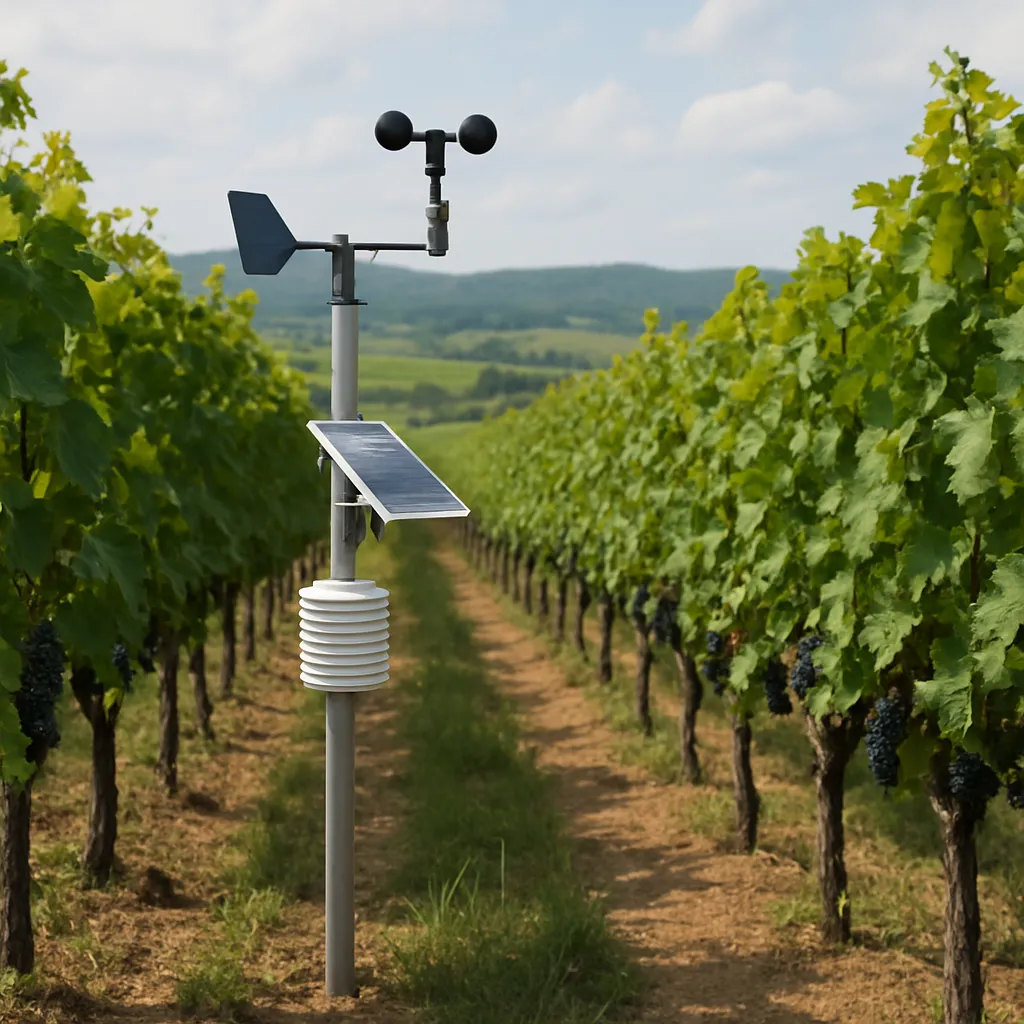
- Weather stations featuring shielded thermistors, capacitive humidity sensors, and solar radiation detectors
- Soil probes measuring volumetric water content, electrical conductivity, and temperature at multiple depths
- Leaf wetness sensors to assess dew onset and duration, crucial for mildew and botrytis forecasting
- Wind anemometers and vane sensors to capture airflow patterns that influence disease spread and evapotranspiration
- Infrared canopy sensors or thermal cameras mounted on poles or UAVs for spatial heat mapping
Wireless Communication and Power Management
The rise of IoT platforms has simplified the deployment of remote sensing arrays. Nodes equipped with LoRaWAN, NB‐IoT, or cellular links transmit measurements to cloud servers with minimal energy footprints. Solar panels or long‐life batteries ensure uninterrupted operation, while edge computing capabilities can perform preliminary filtering to reduce data transmission volumes.
Calibration and Maintenance
Maintaining sensor accuracy requires periodic field calibration and shielding adjustments. Dust, biofilms, and insect activity can degrade readings, so a routine schedule for cleaning and validation against reference instruments is essential. Automated diagnostics and self‐calibrating modules help alleviate labor burdens, but human oversight remains indispensable to confirm data integrity.
Data Management and Analytics
Collecting data represents only the first step; transforming streams of numbers into actionable insights demands sophisticated data analytics frameworks. Key processes include:
- Data ingestion and normalization to align different sensor protocols and time stamps
- Gap‐filling algorithms that reconstruct missing values using interpolation or machine learning models
- Statistical analysis and visualization dashboards that reveal trends, anomalies, and correlations
- Predictive modeling for variables such as heat accumulation (growing degree days) and disease risk indices
- Integration with external meteorological forecasts to enhance local predictions
Cloud‐based platforms enable multi‐site comparison, where performance metrics from one vineyard inform best practices in another. Customizable alerts notify managers of threshold breaches—such as extreme heat events—facilitating swift interventions.
Machine Vision and AI
Beyond point sensors, machine vision systems mounted on canopy traversing robots or drones capture multispectral imagery. AI‐driven algorithms detect leaf discoloration, pest damage, or structural anomalies, extending microclimate networks with direct visual evidence of vine health. Combining physiological data with image analysis accelerates accurate yield forecasting and quality grading.
Practical Applications and Growth Strategies
Adoption of microclimate monitoring is accelerating among wineries seeking enhanced control over grape attributes such as sugar accumulation, acidity balance, and phenolic development. Strategies for implementing an effective network include:
- Site evaluation: mapping elevation, aspect, and soil variability to guide sensor placement
- Phased deployment: starting with prototype clusters, assessing return on investment, then scaling across the property
- Cross‐disciplinary collaboration: involving viticulturists, agronomists, data scientists, and IT specialists
- Farmer training programs for interpreting dashboards and executing data‐driven decisions
- Partnerships with technology providers to customize solutions for regional climates and cultivar requirements
Case studies demonstrate that vineyards equipped with microclimate intelligence achieve up to 20% water savings, a 15% reduction in chemical inputs, and improved fruit uniformity. Such gains translate into premium wines that command higher market prices.
Emerging Trends
Looking ahead, networks of autonomous ground vehicles and swarms of micro‐drones will fill spatial gaps between fixed sensors. Real‐time edge analytics will enable on‐the‐fly adjustments to irrigation valves or targeted canopy sprays. Blockchain‐linked sensor data may one day certify sustainable practices, enhancing traceability from vineyard to bottle.
Challenges and Considerations
While the potential is vast, growers must navigate challenges including:
- Initial capital investment and uncertain payback timelines
- Data security and privacy concerns when utilizing cloud services
- Interoperability issues among devices from multiple vendors
- Resistance to change in traditional vineyard operations
Overcoming these hurdles requires clear demonstration of value, robust training programs, and flexible financing models that spread costs over multiple seasons.
Implementing a Resilient Microclimate Network
Successful long‐term microclimate monitoring depends on a robust infrastructure. Key steps include:
- Designing a redundant communication backbone to minimize single‐point failures
- Developing a data governance framework that defines ownership, access rights, and retention policies
- Establishing clear standard operating procedures for sensor deployment, servicing, and decommissioning
- Creating user‐friendly dashboards with role‐based views tailored for vineyard managers, agronomists, and executive teams
- Conducting periodic performance reviews to refine sensor density, calibration protocols, and analytic models
By embedding these practices within the operational fabric, vineyards can ensure their microclimate networks remain accurate, resilient, and aligned with long‐term business objectives.
Advancing Sustainability Through Precision Insights
The convergence of high‐resolution climatic measurements and advanced analytics empowers growers to minimize environmental impact while enhancing grape quality. Precision viticulture anchored in real‐time microclimate monitoring fosters resource efficiency, reduces carbon footprint, and elevates wine craftsmanship. As sensor technology continues to evolve, the vineyard of the future will be defined by intelligent, adaptive systems that respond dynamically to every microclimatic nuance, unlocking new frontiers in agricultural innovation.