Cotton remains one of the world’s most widely cultivated fibers, yet its production often strains precious water resources. By embracing innovative approaches, farmers can balance high-quality output with environmental stewardship. This article explores strategies for reducing water consumption in cotton cultivation while maintaining or boosting overall yield. Through targeted agronomic practices, advanced technology adoption, robust partnerships, and supportive policy frameworks, the cotton sector can transform its water footprint and contribute to long-term sustainability.
Innovative Water-Efficient Agronomic Practices
Variety Selection and Crop Management
Choosing the right cotton cultivars represents a fundamental step toward improved efficiency. Modern breeding programs have developed drought-tolerant varieties with deeper root systems that access moisture from below the surface. These roots enhance resilience against erratic rainfall patterns and mitigate risks associated with climate change. Farmers can further optimize performance by rotating cotton with legumes or cover crops, which fix nitrogen, improve soil health, and reduce evaporation losses.
Targeted Irrigation Methods
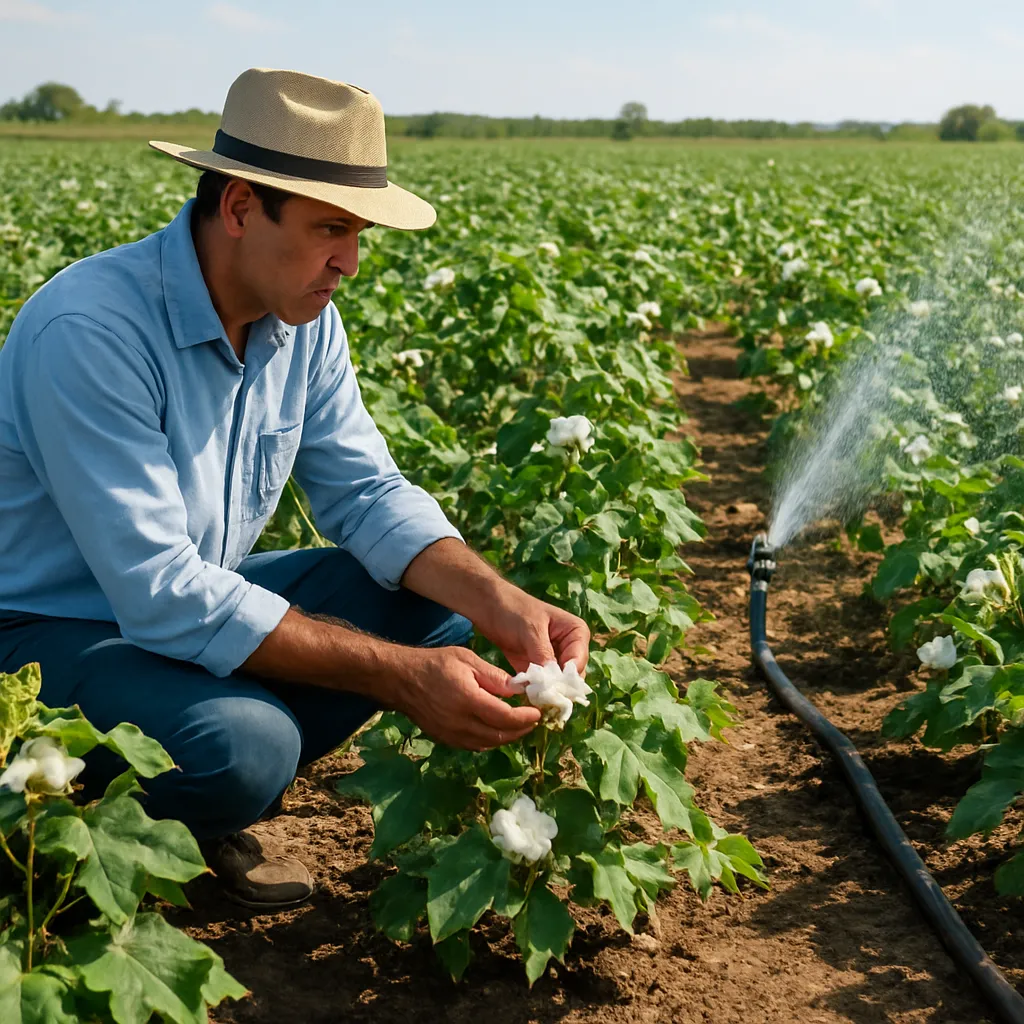
- Drip irrigation: Delivers water directly to the root zone, minimizing surface evaporation and runoff. Studies show drip-irrigated cotton uses up to 40% less water than conventional flood systems.
- Subsurface irrigation: Embeds tubing below the soil surface to cut evaporation rates further and maintain uniform moisture levels.
- Deficit irrigation: Applies less water than full crop evapotranspiration demands, encouraging deeper rooting while preserving economic returns when timed properly.
- Alternate wetting and drying: Allows soils to cycle between wet and dry states, lowering water use and improving root oxygenation.
Soil Moisture Conservation
Maintaining adequate moisture in the root zone is crucial for cotton’s efficient development. Practices such as mulching with organic residues or biodegradable films can reduce evaporation by up to 50%. Conservation tillage, including no-till or minimum-till systems, preserves soil structure and organic matter, thereby enhancing water retention. Additionally, planting cover crops during off-seasons prevents moisture loss and suppresses weed growth, reducing competition for limited water resources.
Integrating Precision Agriculture Tools
Remote Sensing and Monitoring
Satellite imagery and aerial drones equipped with multispectral sensors enable farmers to detect areas of water stress before visual symptoms appear. These tools measure canopy temperature, leaf chlorophyll content, and moisture indices, guiding precise irrigation applications. By targeting only the zones in need, producers can limit water usage and avoid over-irrigation, leading to improved yields and reduced operational costs.
IoT Sensors and Automated Systems
Deploying soil moisture sensors, weather stations, and flow meters across the field provides real-time data on local conditions. This network informs automated irrigation systems that adjust water delivery based on live measurements. Integrating these sensors with cloud-based platforms and mobile applications empowers farmers to make data-driven decisions from anywhere, enhancing responsiveness to sudden weather shifts and ensuring optimal water distribution.
Data Analytics for Decision Support
Big data analytics and machine learning algorithms can process historical records, remote sensing inputs, and on-farm measurements to forecast crop water needs. Decision-support tools evaluate various scenarios—such as expected rainfall or market prices—to recommend irrigation schedules that balance resource conservation with economic performance. These predictive insights enable proactive management and continuous refinement of water-saving strategies.
Collaborations and Market Incentives
Certification Schemes and Premium Markets
Brands and retailers increasingly demand evidence of responsible sourcing. Certification programs like Better Cotton Initiative (BCI) and Cotton LEADS audit practices related to water use, pesticide management, and labor standards. Participating farmers often gain access to premium markets and value-added premiums for their bales. These incentives create a direct link between water stewardship and higher profit margins.
Engaging Local Farmers and Stakeholder Partnerships
Effective water management requires collaboration among growers, agribusinesses, researchers, and government agencies. Farmer cooperatives can pool resources to invest in shared irrigation infrastructure, such as centralized pumping stations or local water storage systems. Extension services and non-governmental organizations play a vital role in delivering training, demonstrations, and technical support. By forging ties with community leaders and water user associations, initiatives gain credibility and achieve broader adoption.
Policy Frameworks and Capacity Building
Government Programs and Subsidies
Public policies that incentivize efficient irrigation systems can accelerate adoption at scale. Subsidies or cost-sharing schemes for installing drip lines, moisture sensors, or reservoirs lower financial barriers for smallholder farmers. Regional water allocation plans and tiered pricing structures encourage conservation by penalizing excessive withdrawals while rewarding judicious use. Clear regulations and transparent monitoring ensure equitable access to shared water resources.
Farmer Training and Extension Services
Investing in human capital is as critical as investing in hardware. Workshops, field days, and digital learning platforms equip growers with knowledge on soil–water–plant relationships, scheduling tools, and maintenance of modern irrigation equipment. Peer-to-peer learning and farmer field schools promote experiential understanding and foster local champions who inspire neighbors to adopt similar practices. Continuous capacity building bridges the gap between research innovations and on-farm realities.
Emerging Frontiers and Future Directions
Biotechnological Advances
Cutting-edge research in genetic engineering aims to enhance cotton’s drought tolerance by introducing traits from desert-adapted species. These biotechnological solutions promise to further reduce water requirements while preserving fiber quality and resistance to pests and diseases.
Integrated Landscape Management
Looking beyond individual fields, integrated approaches consider entire watersheds and ecosystems. Combining cotton production with agroforestry, wetland restoration, or managed aquifer recharge can harmonize agricultural output with regional water security goals. Strategic landscape planning optimizes water allocation across multiple land uses, fostering resilience in the face of unpredictable weather patterns.
Consumer Engagement
Raising awareness among consumers about the environmental impact of cotton can stimulate demand for responsibly farmed products. Transparent labeling, traceability platforms, and storytelling around water‐saving efforts build brand loyalty and reinforce the economic viability of sustainable practices.