Harnessing the synergy between renewable energy and integrated farming, solar-powered aquaponics offers a transformative model for sustainable agriculture. By combining fish cultivation and plant production in a closed-loop ecosystem powered entirely by the sun, this approach addresses critical challenges such as water scarcity, land degradation, and limited access to electricity in remote regions. The following sections explore its core principles, technical requirements, socio-economic impacts, and the path toward broader adoption in developing nations.
Overview of Solar-Powered Aquaponics
Aquaponics merges two traditional agricultural methods: aquaculture (raising fish) and hydroponics (soilless plant cultivation). Fish waste supplies essential nutrients for plants, while plants naturally purify the water that returns to the fish tanks. When powered by solar energy, this system becomes entirely off-grid, reducing dependence on fossil fuels and grid infrastructure.
In many developing regions, unreliable electricity and overexploited water sources impede conventional farming. Solar-powered aquaponics tackles these issues by:
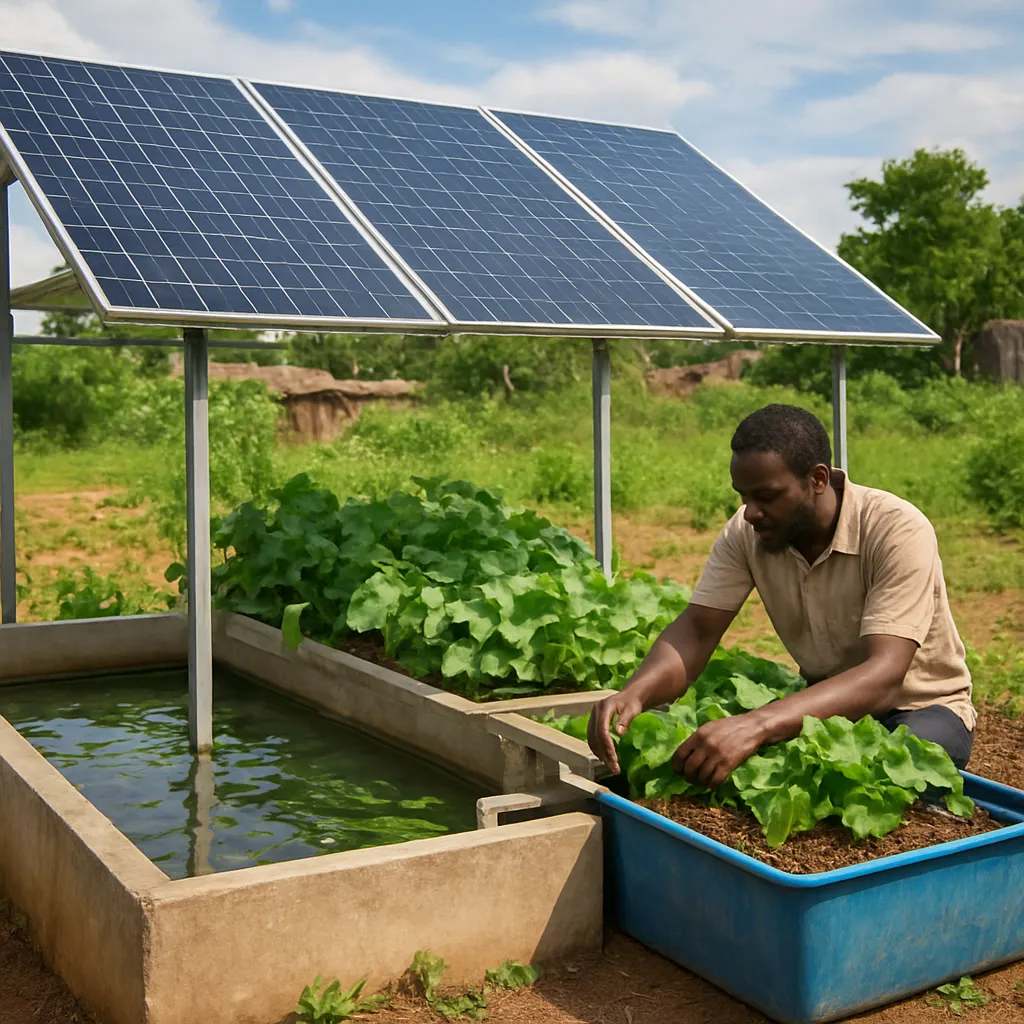
- Utilizing photovoltaic panels or solar thermal arrays to drive water pumps and aerators, ensuring continuous circulation and oxygenation.
- Implementing closed-loop nutrient cycling, minimizing water consumption to a fraction of traditional irrigation methods.
- Providing year-round cultivation potential, independent of seasonal rainfall or soil fertility constraints.
Technical Components and Design Principles
Effective system design balances energy generation, water flow, and biological processes. Key elements include:
- Solar Array: Photovoltaic panels sized to match pump horsepower and lighting needs. Panels must be oriented for maximum sun exposure and equipped with charge controllers and battery banks for dusk-to-dawn operation.
- Fish Tanks: Aerated vessels stocked with hardy species (tilapia, catfish, or carp). Consistent water quality is essential for fish health and nutrient production.
- Grow Beds: Media-filled or raft-based beds seeded with leafy greens, herbs, or fruiting vegetables. The selection of plant species depends on market demand and local dietary preferences.
- Pumps and Plumbing: Solar-driven pumps circulate water from fish tanks to grow beds and back. Redundancy and appropriate pipe sizing prevent flow interruptions and energy waste.
- Filtration Units: Mechanical and biological filters remove solid waste and manage ammonia levels, creating an optimal environment for nitrifying bacteria.
- Monitoring Systems: Sensors and basic controllers track pH, temperature, dissolved oxygen, and nutrient concentrations, enabling timely interventions and maximizing sustainability.
Designing for simplicity and local adaptability is crucial. Using locally available materials—such as repurposed containers, inexpensive solar modules, and indigenous plant varieties—keeps startup costs cost-effective and encourages community ownership.
Socio-Economic Impacts in Developing Nations
Solar-powered aquaponics presents a promising avenue for enhancing food security and livelihoods. The integration of this technology fosters multiple benefits:
- Increased Yield: Dual production of fish protein and leafy greens can exceed yields from traditional farms on the same footprint.
- Resilience: Systems operate through droughts and energy outages, buffering communities against climate variability and supply chain disruptions.
- Job Creation: Technical assembly, maintenance, and marketing contribute to new income streams, especially when women and youth are engaged in training programs.
- Nutrition: Year-round access to fresh vegetables and fish helps combat malnutrition and diet-related illnesses.
- Environment: Closed-loop water use reduces extraction from rivers and aquifers, while renewable power avoids greenhouse gas emissions.
Case studies from Sub-Saharan Africa and Southeast Asia demonstrate how pilot projects seed regional clusters. Farmers share best practices through cooperative networks, scaling production and lowering unit costs. Government agencies and NGOs often provide initial grants or microfinance options to facilitate technology transfer.
Challenges and Future Prospects
Despite its promise, widespread adoption encounters obstacles. Key challenges include:
- High initial capital expenditure for quality solar panels, pumps, and filtration equipment. Even with long-term savings, upfront costs can deter low-income farmers.
- Limited local expertise in system design, requiring robust training programs and extension services to build technical capacity.
- Fluctuations in solar irradiance affect pump performance; energy storage solutions add complexity and cost.
- Regulatory hurdles around water rights, fish stocking permits, and land use may slow project approvals.
To overcome these barriers, stakeholders are exploring innovative financing models—such as pay-as-you-go solar rentals and cooperative ownership schemes—that reduce financial risk. Collaborations between research institutions and local entrepreneurs drive down component costs through open-source designs and modular kits.
Moving forward, advancements in low-cost sensors and decentralized data platforms will enhance real-time management and predictive maintenance. Integrating rainwater harvesting with solar aquaponics can further optimize water resources. Ultimately, the fusion of solar-powered technology with aquaponic design charts a sustainable pathway for resilient agriculture in the world’s most vulnerable regions.