Advancements in agricultural technology have led to the development of sophisticated tools that empower farmers to anticipate harvest outcomes months in advance. By leveraging data streams from weather stations, drones, and field sensors, modern platforms transform complex information into actionable insights. This article delves into the inner workings of AI-powered farm yield forecasting tools, highlighting their core components, real-world applications, and the path ahead for a smarter, more resilient agricultural sector.
Understanding AI in Modern Agriculture
The integration of AI into farming practices marks a significant departure from traditional, intuition-based management. Instead of relying solely on past experience or static guidelines, growers now harness algorithms that learn from vast datasets—ranging from soil chemistry to historical weather patterns—to project future outcomes. Such systems rely on predictive analytics to identify subtle correlations that escape the human eye, enabling a paradigm shift from reactive to proactive crop management.
Central to this transformation is the ability to process and interpret data at scale. High-resolution satellite passes capture changes in plant health, while ground-level sensors continuously monitor moisture, temperature, and nutrient levels. By feeding this information into neural networks, forecasting tools generate precise estimates of crop yields, guiding decisions on irrigation scheduling, fertilizer application, and harvest planning.
Key Components of Yield Forecasting Tools
Data Acquisition and Integration
- Weather Networks: Detailed records of precipitation, temperature trends, and wind speed form the backbone of any accurate forecast.
- Remote Sensing: Satellite imagery and drone surveys offer periodic snapshots of vegetation indices, revealing early signs of stress or disease.
- On-Site Instrumentation: In-field probes measure soil moisture, pH levels, and microclimate variations in real-time.
- Historical Archives: Longitudinal data on past yields and management practices provide context, helping algorithms distinguish normal variation from emerging threats.
Analytical Models and Algorithms
The heart of any forecasting platform lies in its suite of computational methods. From regression analysis to advanced machine learning frameworks, these algorithms sift through multivariate records to detect patterns and predict outcomes. Techniques such as random forests, gradient boosting, and deep learning networks each contribute unique strengths—whether handling categorical inputs, adapting to nonlinear relationships, or scaling across vast geographies.
User Interfaces and Decision Support
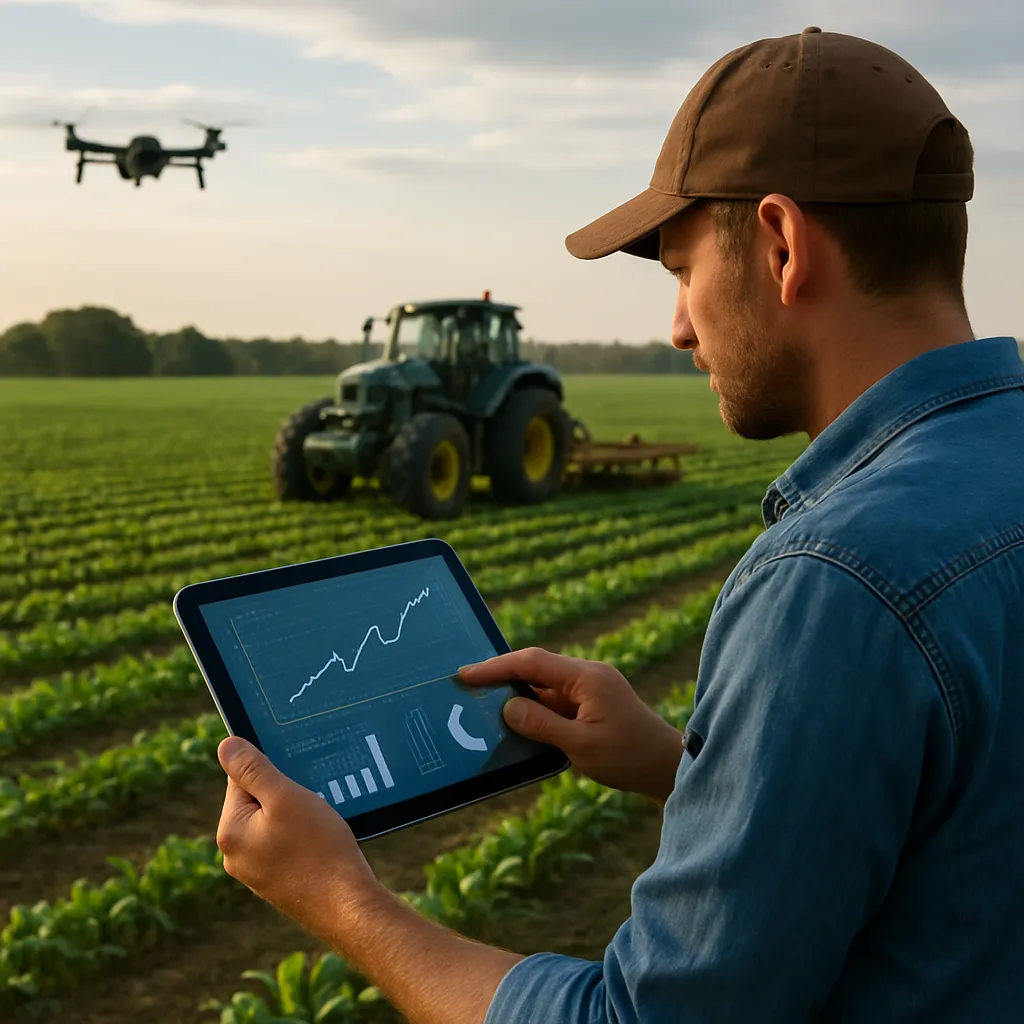
Effective tools translate raw model outputs into clear recommendations. Interactive dashboards visualize projected yields via heat maps or time-series charts, highlighting high-risk zones and suggesting remedial actions. By incorporating scenario analysis, farmers can simulate the impact of alternative strategies—such as shifting planting dates or adjusting irrigation—to identify the most cost-effective path to maximize productivity.
Applications and Case Studies
Early adopters of AI-based forecasting have reported significant gains in resource efficiency and profitability. In the Corn Belt of the United States, a cluster of mid-sized farms reduced fertilizer usage by 15% while maintaining yield targets. By applying model-derived insights, they optimized nutrient distribution according to soil variability, translating to both economic and environmental benefits.
In Southeast Asia, rice producers confronted increasingly erratic monsoon patterns. Forecasting platforms combining local weather forecasts with crop growth simulations enabled growers to adjust planting windows, minimizing crop stress during peak rainfall periods. This data-driven approach allowed communities to safeguard food security against rising climate uncertainty.
- Vineyard Management: In Mediterranean regions, winemakers use yield forecasts to calibrate harvest timing, ensuring consistent grape quality and sugar content for premium wines.
- Vegetable Greenhouses: Controlled environments benefit from AI systems that predict growth rates under variable light, humidity, and temperature regimes, streamlining labor allocation and market delivery schedules.
- Large-Scale Grain Operations: Precision deployment of machinery and field crews is guided by zone-specific forecasts, reducing idle time and fuel consumption.
Challenges and Future Directions
Despite impressive progress, several hurdles persist in the quest for universal adoption. Data sparsity in remote or under-resourced regions hampers model accuracy, necessitating creative partnerships to bolster sensor networks and satellite coverage. Ensuring interoperability across diverse hardware platforms and software ecosystems remains a technical challenge, as does maintaining data privacy and ownership rights for individual producers.
Advances on the horizon include hybrid models that integrate physiological crop growth simulations with AI, offering deeper insights into plant responses under stress. Real-time edge computing solutions promise lower latency by processing data directly on farm equipment, while federated learning approaches aim to preserve confidentiality by training models across distributed datasets without centralizing sensitive records.
Ultimately, the adoption of AI-driven yield forecasting tools hinges not only on technological sophistication but also on trust and collaboration. Extension services, agronomy consultants, and technology providers must work hand-in-hand to ensure that smallholder and large-scale farmers alike benefit from innovations. By building intuitive interfaces, offering transparent model explanations, and demonstrating tangible return on investment, the sector can usher in a new era of sustainable, high-yield agriculture powered by smart algorithms and human expertise.