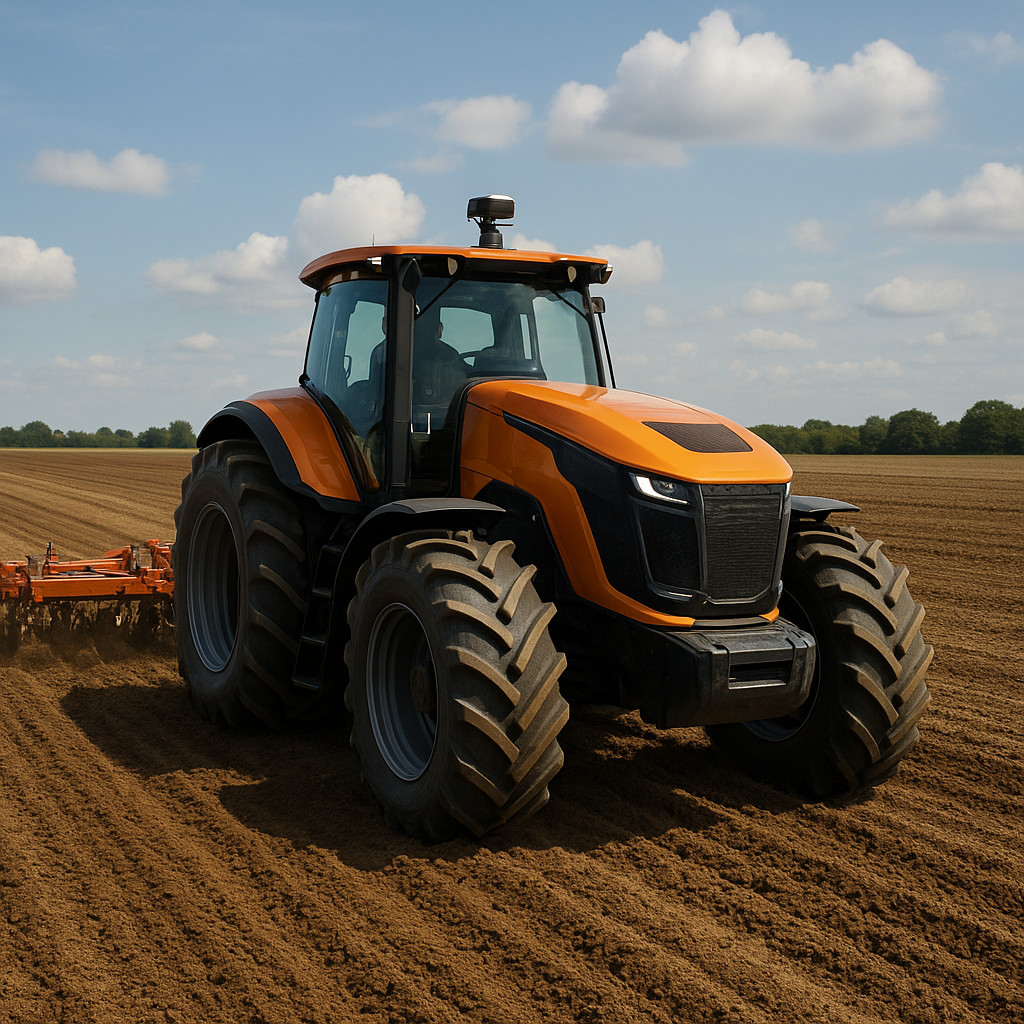
The agriculture sector is undergoing a dramatic transformation as farms worldwide adopt cutting-edge machinery to meet rising demand. Autonomous tractors are leading this shift, offering a blend of efficiency, precision, and robust performance. These unmanned vehicles promise to reshape traditional plowing, planting, and harvesting methods by integrating advanced sensors, machine learning, and real-time data-driven decision-making. Farmers now gain access to tools that operate around the clock, minimizing labor shortages and reducing operational costs. Against the backdrop of global population growth and environmental challenges, the autonomous tractor emerges as a vital component of modern farming strategies.
Emergence of Autonomous Tractors
Advances in robotics and autonomous systems paved the way for the first generation of driverless farm machinery. Early prototypes relied on GPS guidance and simple obstacle detection, enabling straight-line path following during tillage. Over the last decade, integration of computer vision and sophisticated mapping has elevated capabilities. Today’s platforms can navigate complex field topographies, distinguish between crops and weeds, and adjust implements on the fly.
Key factors contributing to widespread adoption include:
- innovation in sensor technologies that capture multispectral and LiDAR data
- open-source software frameworks facilitating rapid development
- collaboration between equipment manufacturers and agri-tech startups
- government incentives supporting precision agriculture initiatives
An essential milestone was the establishment of interoperability standards allowing diverse implements to communicate seamlessly with tractor control systems. This breakthrough unlocked modular, upgradeable fleets that evolve with a farm’s needs.
Impact on Productivity and Sustainability
Autonomous tractors dramatically boost productivity by operating continuously without breaks, covering more acreage per day and reducing soil compaction through optimized routes. Automated scheduling systems can deploy multiple tractors in a fleet, orchestrating field tasks to maximize yield potential while safeguarding soil health.
Environmental benefits are equally pronounced. Advanced implements deploy targeted applications of water, fertilizers, and pesticides with centimeter-level accuracy. This precision farming approach minimizes chemical runoff, conserves water, and promotes biodiversity. By reducing inputs without compromising output, autonomous machines support long-term sustainability goals and lower the carbon footprint of agricultural production.
Labor Dynamics
Shifting to unmanned operations addresses widespread labor shortages in rural regions. While the role of human labor evolves from manual control to oversight, training programs equip operators with skills in remote monitoring, system diagnostics, and agronomic analysis. This transition fosters higher-skilled jobs, offering rural communities resilient employment opportunities centered on managing intelligent machinery.
Technological Innovations Driving Autonomy
Cutting-edge components embedded in autonomous tractors include:
- High-precision RTK-GPS modules for sub-inch guidance
- Multimodal sensors combining cameras, ultrasonic detectors, and radar
- Onboard AI processors capable of real-time path planning and anomaly detection
- Vehicle-to-vehicle connectivity enabling coordinated multi-unit tasks
Machine learning models trained on extensive agronomic datasets empower tractors to adapt to varying soil conditions and crop types. Continuous firmware updates introduce new features, such as dynamic depth control or automated implement calibration. A robust cybersecurity framework protects communication channels and cloud-based data repositories, ensuring system integrity and data privacy.
Sensor Fusion and Mapping
By fusing data streams from LiDAR, hyperspectral imaging, and inertial measurement units, autonomous tractors generate high-fidelity field maps. These maps identify micro-variations in topography, allowing implements to adjust tillage depth and seeding rate in real time. The result is uniform germination, optimized resource allocation, and improved soil structure over successive seasons.
Challenges and Future Outlook
Despite impressive progress, several hurdles remain on the road to full-scale deployment. Initial investment costs can be substantial, deterring small and mid-sized farms. Regulatory frameworks governing unmanned field vehicles vary by region, creating uncertainty around licensure, liability, and cross-border operations. Connectivity constraints in remote areas can impede real-time data exchange between tractors and cloud platforms.
Ongoing research seeks to address these limitations through:
- Modular, scalable pricing models that lower entry barriers
- Public-private partnerships advocating harmonized regulations
- Integration with low-Earth orbit satellite networks to extend coverage
- Development of fallback autonomy modes for disconnected environments
Emerging trends point to fully integrated farm ecosystems in which autonomous tractors collaborate with aerial drones and ground-based harvesters. These fleets will share actionable insights via a unified digital platform, enabling farmers to monitor crop health, soil moisture, and machinery performance from a centralized dashboard.
As technology matures, expect expanding use cases beyond traditional tillage and planting. Autonomous platforms will assume roles in cover cropping, seeding of regenerative species, and precise nutrient banding—enhancing both short-term yields and long-term ecological resilience. With continued advancements in robotic design and innovation in agricultural engineering, the vision of a fully automated, sustainable farm draws ever closer.