Innovation in farming practices often revolves around adaptability and resource management. Integrating 3D printing with irrigation technology enables bespoke solutions for a variety of soil types, topographies, and crop requirements. By leveraging on-demand manufacturing, farmers and agronomists can achieve unprecedented levels of precision, efficiency, and sustainability, ultimately transforming sections of the field into optimized growing zones.
Technological Foundations of 3D-Printed Irrigation
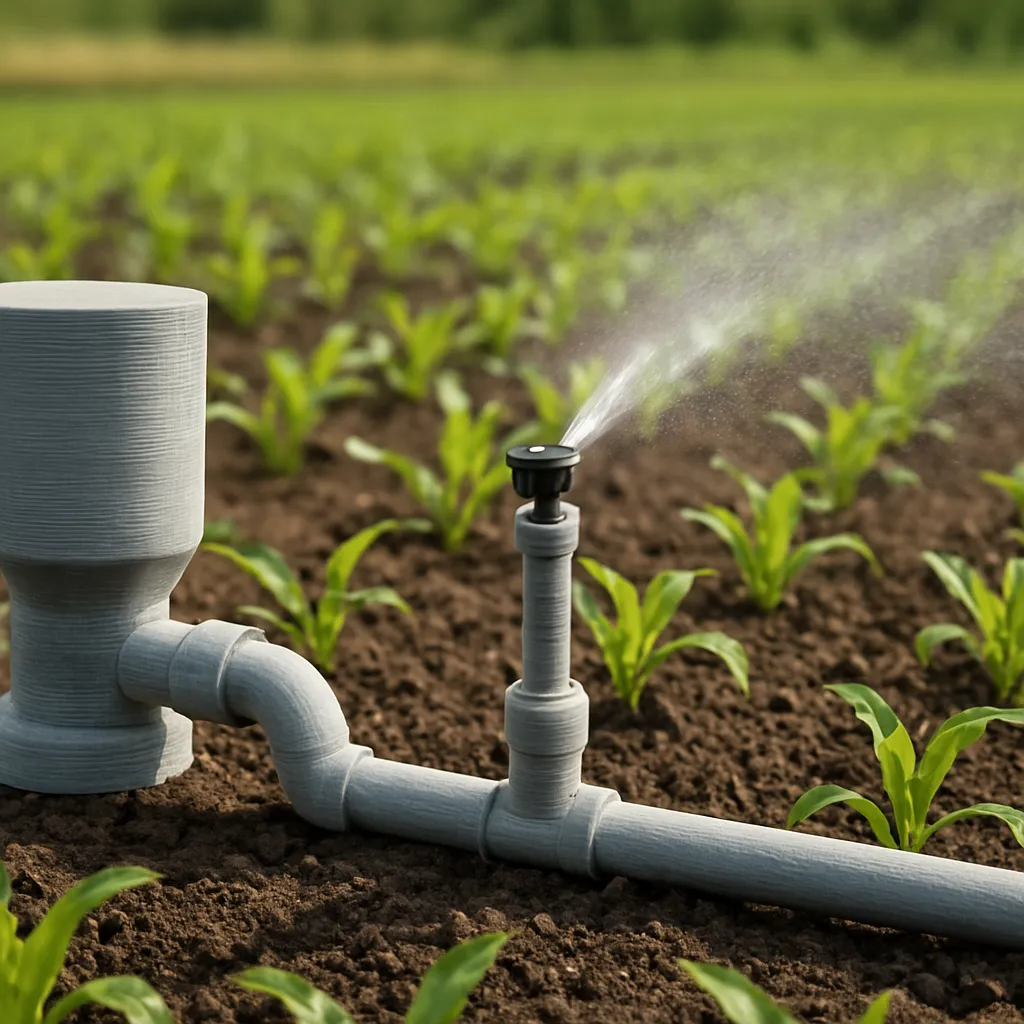
The core concept of a 3D-printed irrigation system is to generate components tailored to site-specific environmental conditions. Traditional irrigation networks rely on standardized pipes, sprinklers, and drip tapes, which can be ill-suited for irregular field geometries or microclimates. By contrast, additive manufacturing builds parts layer by layer, using digital models as blueprints. Key advantages include:
- Customization: Designers can adjust nozzle shape, emitter spacing, and flow rates in real time to respond to slope, soil permeability, or crop variety.
- On-demand production: Components are printed locally, cutting logistical delays and minimizing stockpiles of unused inventory.
- Complex geometries: Curved channels, multi-chamber manifolds, and integrated filters become feasible, enhancing water distribution uniformity.
- Cost efficiency: Low-volume runs become economical, reducing waste associated with over-manufacturing standardized parts.
Advancements in printer hardware, such as large-format extruders and multi-material heads, now allow for durable parts suitable for continuous exposure to sunlight and fluctuating temperatures. Coupled with open-source software for irrigation modeling, growers can develop a digital twin of their field before ever extruding a single component.
Design and Prototyping for Custom Fields
Every agricultural plot presents unique challenges. Whether terraces on a hillside, meandering waterways, or partial shading from woodland margins, a one-size-fits-all approach underdelivers. Through additive manufacturing, engineers can:
- Create topography-aware drip lines that maintain consistent emitter pressure across inclines and declines.
- Embed connectors directly into support stakes, eliminating the need for clamps or adhesives and reducing leak points.
- Integrate sensor housings—such as moisture probes or nutrient monitors—directly into irrigation junctions for real-time data acquisition.
- Rapidly iterate prototypes on-site, testing flow rates and spray patterns before final installation.
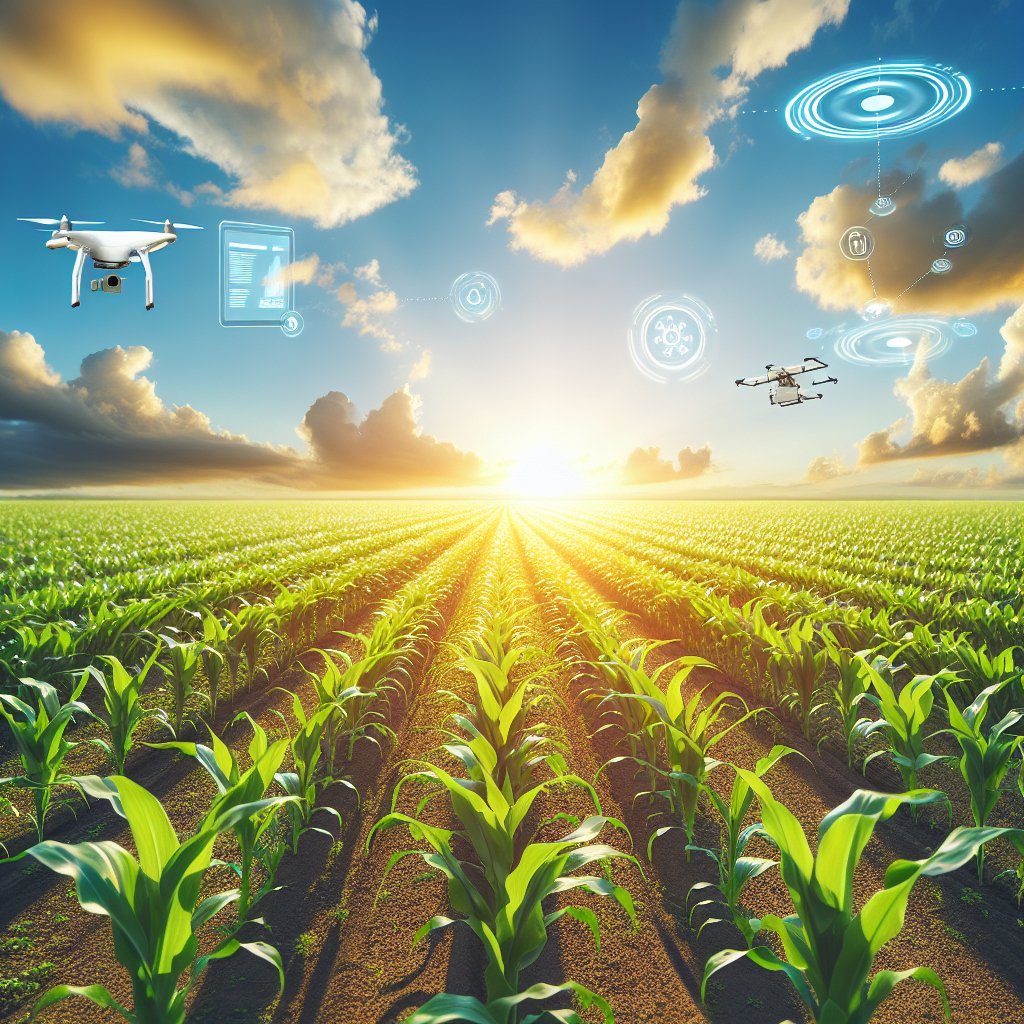
In one pilot project, a vineyard with steep terraces benefited from custom-designed micro-sprinklers. Engineers used drone-based mapping to generate elevation models. They then adapted emitter angles and delivery orifices in the CAD environment to counteract gravity’s effects on droplet trajectory. After printing sample nozzles in the farm workshop, technicians measured field performance and made minor adjustments. Within days, the vineyard had a fully operational drip-sprinkler hybrid network delivering uniform moisture to grape clusters, boosting yield consistency.
Materials and Environmental Considerations
Material selection is critical for longevity and ecological impact. Common 3D printing polymers include PLA, PETG, and ASA, but these may degrade under UV radiation or leach additives into soil and water. Innovative research is unveiling agriculturally friendly resins and composites:
- Biodegradable blends strengthened with natural fibers, providing structural integrity while breaking down harmlessly after a defined lifespan.
- UV-resistant copolymers infused with stabilizers that prevent brittleness, ensuring components last multiple growing seasons.
- Recycled plastics reclaimed from agricultural waste—such as baler twine—processed into filaments for a circular economy approach.
Furthermore, additive processes can incorporate porous sections that act as slow-release reservoirs for nutrients or beneficial microbes. Embedding humic acid granules within the wall of a drip emitter allows for localized fertilization, reducing truckloads of chemical inputs and minimizing runoff. This synergy of sustainability and innovation positions 3D-printed irrigation as a key element in regenerative agriculture strategies.
Implementation Strategies and Field Trials
Rolling out a custom irrigation system requires coordination between farm managers, agronomists, and technical teams. A typical workflow includes:
- Site assessment: Soil testing, moisture mapping, and geospatial surveys.
- Digital design: CAD modeling optimized for hydraulic performance and mechanical strength.
- On-site printing: Mobile printers or local workshops manufacture parts overnight to meet seasonal timelines.
- Installation: Modular parts snap together, often without specialized tools, reducing labor costs and downtime.
- Monitoring: IoT-enabled sensors feed data into farm management platforms, enabling predictive adjustments.
One large-scale trial in a rice paddy network demonstrated a 25 percent reduction in water usage by modulating emitter outputs based on microvariations in soil texture. Farmers reported not only cost savings but also improved crop health, attributed to more consistent moisture levels during critical growth stages. Such success stories underscore the transformative potential of precision irrigation powered by 3D-printed solutions.
Challenges and Future Prospects
Despite the promise, several obstacles must be addressed before widespread adoption:
- Initial capital investment for large-format printers and specialized extrusion nozzles.
- Standardization of material certification to ensure food-grade safety and environmental compliance.
- Training agricultural workers in CAD manipulation and printer operation.
- Ensuring durability against mechanical stresses, pests, and extreme weather events.
Looking ahead, hybrid manufacturing systems that combine subtractive and additive processes could create metal–polymer composite emitters with enhanced wear resistance. Integration with machine learning algorithms may also allow irrigation networks to self-optimize, dynamically adjusting flow rates based on live data feeds. As both hardware costs decline and expertise becomes more accessible, the marriage of additive manufacturing and water management is set to redefine how we cultivate customized fields across diverse climates and terrains.