The integration of unmanned aerial vehicles into seeding operations represents a paradigm shift for modern agriculture. By leveraging cutting-edge technologies, farmers can now plant crops with unprecedented speed, accuracy, and minimal soil disturbance. Autonomous seeding drones are redefining how sowing tasks are executed, enabling agricultural enterprises to optimize resource usage, enhance field productivity, and streamline labor-intensive processes. This article explores the evolution, technical underpinnings, operational outcomes, environmental benefits, and future prospects of aerial seeding platforms, highlighting key developments that are reshaping the global farming landscape.
Evolution of Drone-Based Seeding Techniques
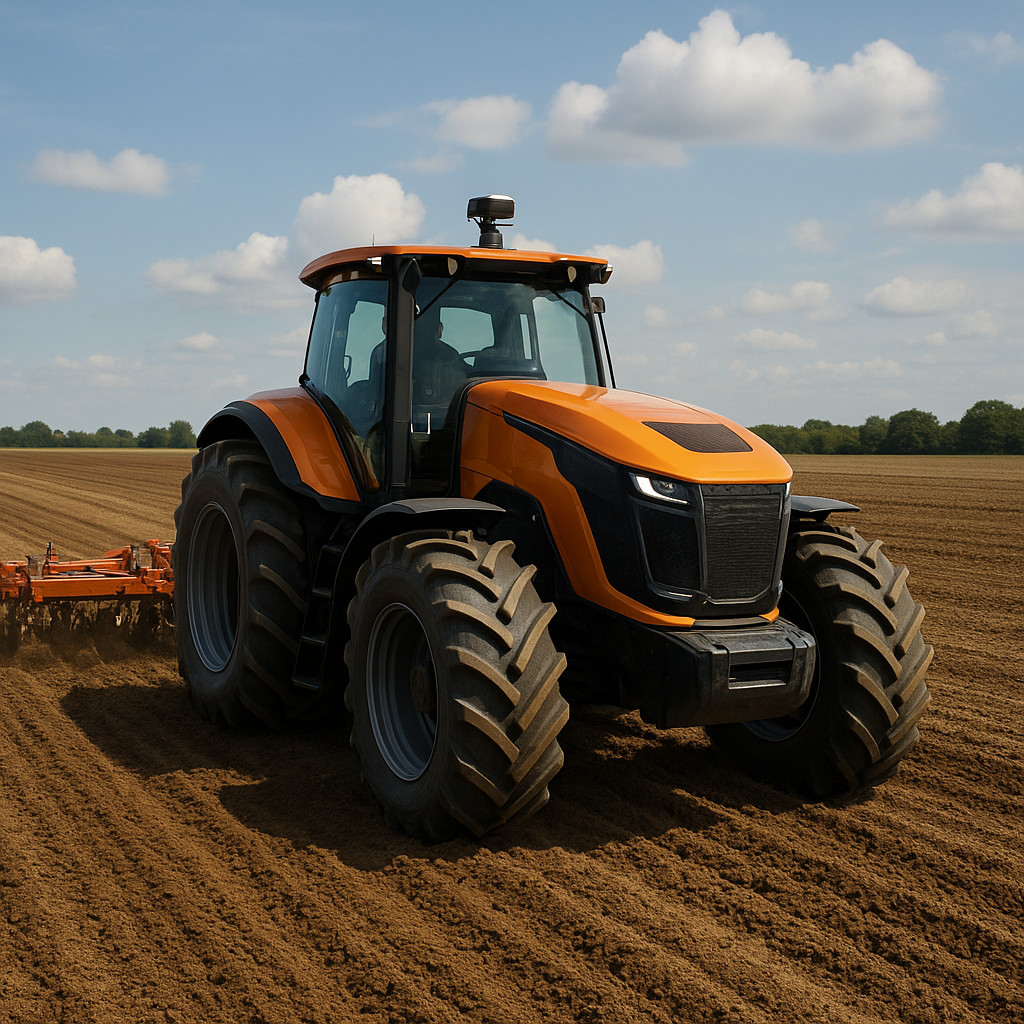
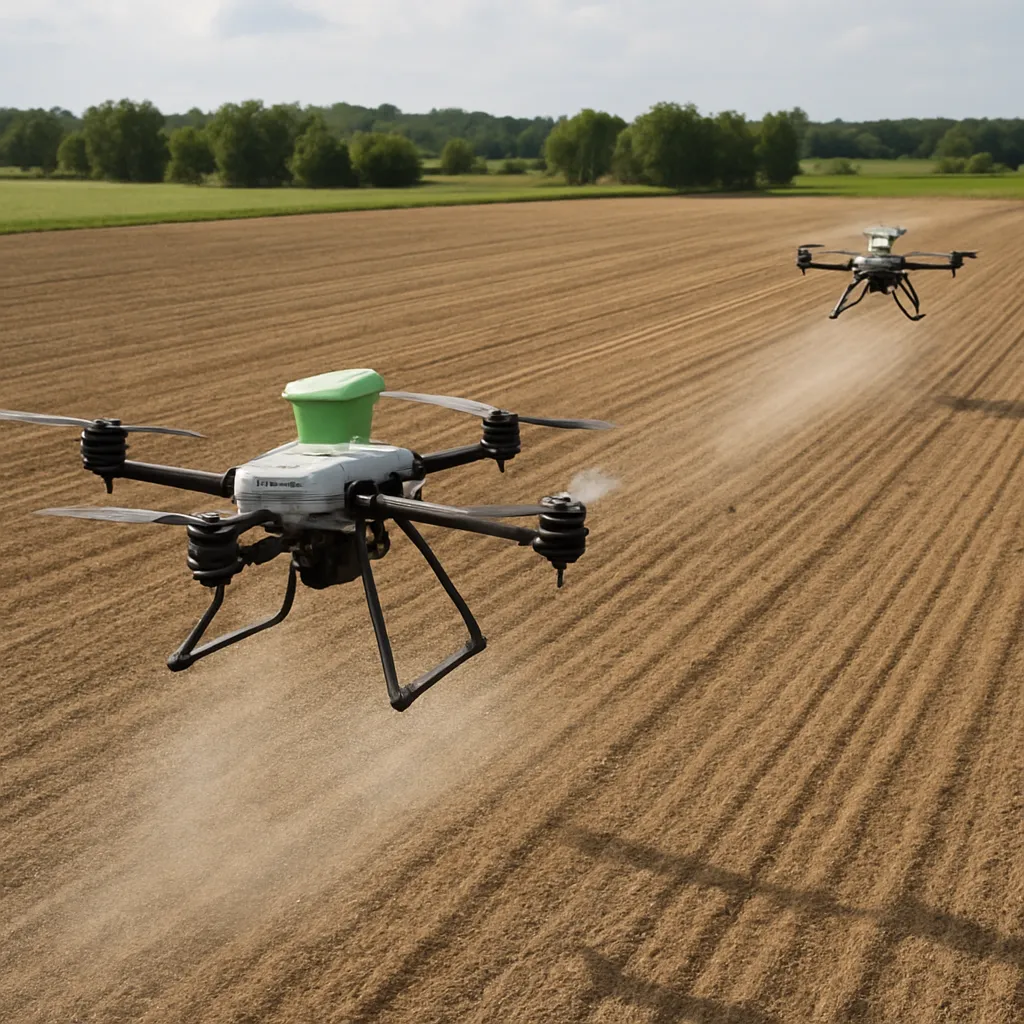
Early mechanized planters revolutionized agriculture by replacing manual labor with tractor-mounted systems, but they still required significant soil preparation and human supervision. The introduction of small multirotor vehicles in the past decade marked the beginning of aerial applications for crop management, initially focusing on spraying and remote sensing. Researchers soon recognized the potential to extend these platforms from spraying to seeding, launching prototypes that could deliver seed pods or pelleted grains directly into tilled or untilled soil.
Advancements in precision seeding technology coincided with the maturation of flight controllers and navigation systems, enabling fully autonomous mission execution. Early trials demonstrated that drones could operate in irregular field geometries and over diverse terrain types, planting seeds at variable densities tailored to crop requirements. This capability opened pathways for site-specific farming strategies, reducing seed waste and enhancing germination rates.
Labor shortages in rural regions and rising production costs further accelerated research into aerial seeding, prompting collaborations among agritech startups, academic institutions, and equipment manufacturers. Customized platforms emerged for different crop classes—grains, legumes, and specialty plants—showcasing the adaptability of flying seeding units. Today’s systems are the product of iterative improvements driven by real-world field feedback and performance analytics.
Core Technologies and System Design
At the heart of each aerial seeder lies an integrated suite of sensors, actuators, and data-processing modules. High-precision GNSS receivers allow centimeter-level positioning, while onboard inertial measurement units maintain stable flight in fluctuating wind conditions. Advanced autopilots coordinate rotor speeds and nozzle orifices that release individual seed capsules. Seamless communication between the drone and a ground station ensures real-time monitoring and dynamic in-flight adjustments.
Implementing precision control over seed placement relies on state-of-the-art robotics and microfluidic mechanisms. Seed meters—miniature devices adapted from traditional planters—meter and eject individual pellets or seed balls at user-defined intervals. Variable-rate technology connects to soil property maps, dispersing seed in patterns that optimize plant spacing and canopy development.
Energy storage and payload capacity present critical design trade-offs. Most current models utilize high-density lithium battery packs, balancing flight endurance against lifting capability. Researchers are testing hybrid power units and rapid-swap battery systems to minimize downtime between missions. Flight planning software factors in battery consumption, payload distribution, and wind forecasts to generate efficient route maps covering extensive acreage in a single sortie.
- High-accuracy GNSS and RTK positioning
- Onboard LiDAR and optical sensors for terrain mapping
- Seed metering assemblies with micro-actuated gates
- Modular payload bays for different seed sizes
- Real-time telemetry and mission control interfaces
Operational Implementation and Field Performance
Farmers initiate drone-based seeding by generating field boundary files and overlaying geospatial data layers, such as soil moisture or nutrient distribution. Pre-flight checks confirm sensor calibration, battery status, and payload integrity. Once airborne, the drone follows a preprogrammed grid or contour path, autonomously releasing seed units at predetermined GPS waypoints. Operators monitor progress via tablet or laptop, with alerts triggered by deviations from the flight plan or drops in system health metrics.
Field trials across multiple continents have validated substantial gains in planting speed and uniformity. In one study, a single six-rotor drone completed seeding of a 50-hectare plot in under six hours—a task that would require days using manual or tractor-assisted methods. Controlled experiments reported germination improvements of up to 12 percent compared to conventional broadcast methods, attributed to consistent seed depth and spacing.
Enhanced efficiency in seed placement reduces overall input use, conserving seed stock and minimizing overlaps or voids. Moreover, the scalability of drone fleets enables rapid deployment during narrow seasonal windows. By assigning multiple vehicles to intersecting flight paths, large estates can achieve full coverage even in regions prone to sudden weather changes.
Integration with farm management software allows for seamless data exchange. GPS logs, seeding density records, and environmental readings feed into a central database, supporting yield forecasting models and enabling data-driven decisions for future planting cycles.
Benefits to Agriculture and Environmental Impact
Drones offer a non-invasive approach to sowing that can reduce soil compaction and preserve existing soil structure. The suspended flight profile eliminates the need for heavy machinery on delicate ground, safeguarding microbial communities and maintaining water infiltration rates. Less soil disturbance also means lower erosion risks on sloped terrains, contributing to long-term land health.
- Reduced fuel consumption and carbon emissions
- Minimized soil compaction and disturbance
- Targeted seed deployment for optimized plant spacing
- Enhanced crop uniformity and yield stability
- Lower labor requirements and operational costs
By aligning aerial seeding practices with regenerative agriculture principles, operators promote sustainability and responsible resource management. Precise application patterns can integrate cover crops or intercropping schemes designed to suppress weeds and improve soil fertility. These strategies support environmental conservation efforts and help sequester atmospheric carbon within agricultural landscapes.
Furthermore, reducing heavy equipment traffic contributes to lower maintenance costs for field drainage and infrastructure. In regions where weather windows for planting are limited, the agility of drones ensures timely sowing, mitigating risks of germination failure due to delayed operations.
Challenges, Regulations, and Future Development
Despite the clear advantages, aerial seeding platforms face regulatory hurdles in many jurisdictions. Unmanned vehicle guidelines often lag behind technology, imposing line-of-sight requirements or altitude restrictions that constrain large-scale deployment. Certification processes for pilot operators and airspace coordination protocols remain active areas of policy development.
Technical challenges include battery density limitations, vulnerability to extreme weather, and the need for robust fail-safe mechanisms. Ensuring dependable performance in gusty or rainy conditions requires enhanced sensor fusion algorithms and protective hardware enclosures. Connectivity solutions—such as mesh networks or satellite links—are under evaluation to maintain uninterrupted command and control over remote fields.
Ongoing research drives innovation in machine learning algorithms that adapt flight patterns to real-time crop growth metrics. Advances in materials science aim to improve payload containers that biodegrade after seed release, minimizing environmental footprint. Building resilience into drone hardware and software ecosystems enhances system resilience against cyber threats and mechanical failures.
Looking ahead, swarming capabilities could allow coordinated multi-vehicle operations, drastically reducing mission times. Integration with autonomous ground robots and smart irrigation systems promises end-to-end automation from sowing to harvest, forging a truly connected, precision agriculture future.