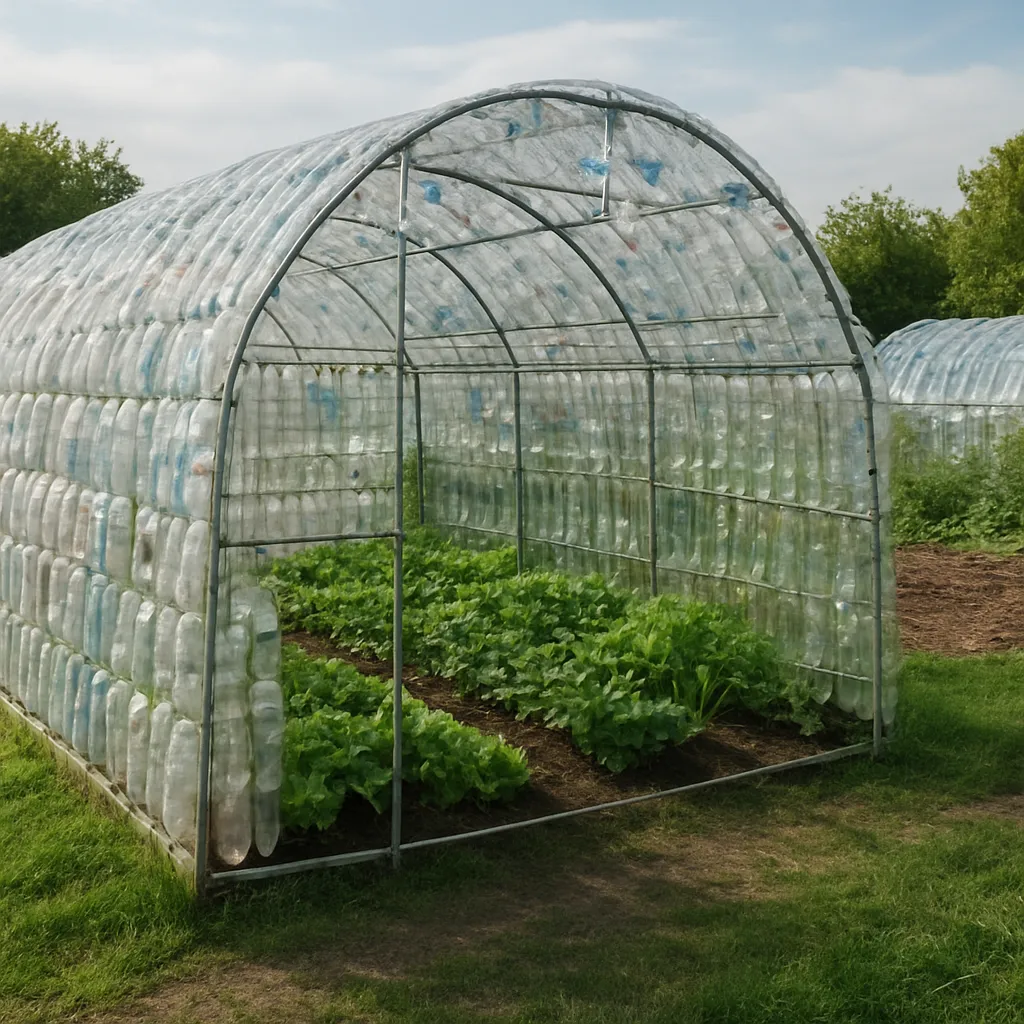
The transition toward sustainable farming solutions has led to the emergence of innovative structures in modern horticulture. One such advancement involves the use of recycled plastic to construct greenhouses that deliver both economic and ecological advantages. By reusing post-consumer and industrial waste streams, farmers and agritech companies are achieving remarkable reductions in overhead while promoting sustainability in food production systems.
Advantages of Recycled Plastic Greenhouses
Traditional greenhouse materials, such as glass and metal, offer excellent light transmission but come with high upfront investment and maintenance demands. Recycled plastic alternatives can match or even exceed performance benchmarks at a fraction of the cost. Key benefits include:
- Cost reduction: The procurement of recycled plastics is often subsidized or available at low scrap rates, translating directly into lower construction expenses.
- Enhanced thermal insulation: Certain polymer blends retain heat more effectively than glass, reducing energy consumption for heating and cooling.
- Resistance to corrosion and breakage: Plastics are inherently resistant to rust and shattering, increasing structural durability over multiple growing seasons.
- Lightweight design: Easier handling and installation reduce labor costs and site preparation time.
- Modularity and scalability: Plastic panels can be custom-molded in different shapes and sizes, allowing growers to expand or reconfigure greenhouses as needed.
These advantages contribute to a more resilient and efficient agricultural infrastructure, particularly in regions where capital access is limited.
Economic Analysis and Cost Savings
Implementing recycled plastic greenhouses can create substantial savings across the entire project lifecycle. A cost-benefit analysis typically examines initial outlay, operational expenses, and expected lifespan. In many scenarios, plastic-based structures deliver a payback period that is 25–40% shorter than conventional setups.
Upfront Investment
- Material procurement: Recycled plastic sheets, tubes, or a combination thereof can be priced at 30–50% lower than new polycarbonate or glass.
- Installation costs: Given the lightweight nature of plastic panels, fewer labor hours are required, often reducing assembly costs by up to 20%.
- Foundational work: The reduced weight load limits the need for heavy-duty foundations, further cutting civil engineering expenses.
Operational Expenses
- Energy consumption: Enhanced insulation properties lead to energy savings of 15–25% in heating and ventilation.
- Maintenance and repairs: Resistant to corrosion, recycled plastics seldom require repainting or replacement, lowering annual maintenance budgets.
- Waste management: When the greenhouse reaches end of life, panels can be reprocessed again, minimizing disposal fees.
Coupled with potential government incentives for circular economy projects, these savings enhance the overall return on investment for growers and agribusinesses.
Design Considerations for Recycled Plastic Structures
Adapting recycled plastic materials into functional agricultural buildings requires careful attention to material properties, climatic conditions, and crop requirements. Considerations include:
- Light transmission: Different polymers offer varied spectral responses. Growers must select grades that optimize photosynthetically active radiation (PAR).
- UV stabilization: Additives or coatings can prolong material life by shielding against ultraviolet degradation.
- Thermal mass: Incorporating fillers or phase-change materials can improve heat retention for nighttime temperature regulation.
- Structural framing: Integrating composite or recycled-metal supports ensures adequate wind and snow load resistance.
- Ventilation and shading: Designing adjustable vents and retractable shade cloths maintains optimal internal climate control.
Efficiency in greenhouse design ultimately hinges on tailoring features to local weather patterns, available waste streams, and targeted crop cycles.
Case Studies in Sustainable Agriculture
Real-world implementations highlight the versatility and scalability of recycled plastic greenhouses. Below are representative examples:
Community Farm in Southern Spain
- Renewable sources: Utilized 10,000 kg of recycled PET bottles to form panel composites, achieving 40% lower build costs compared to new polycarbonate.
- Crop yield improvement: Enhanced insulation led to a 15% increase in winter production of leafy greens.
- Social impact: Local waste management partnerships provided income for community recycling centers.
Vertical Farming Startup in North America
- Modular units: Constructed stackable greenhouse modules using reclaimed HDPE tubing, enabling rapid deployment in urban settings.
- Energy use: Combined solar arrays with high-insulation plastic panels to reduce grid dependency by 60%.
- Scalability: The modular design allowed expansion from a pilot unit to a commercial facility within 18 months.
Future Prospects and Innovations
Ongoing research is poised to enhance the performance of recycled plastic greenhouses even further. Emerging trends include:
- Bio-based additives to improve biodegradability and reduce reliance on petrochemical feedstocks.
- Smart materials that adapt opacity or thermal conductivity in response to environmental sensors.
- Integration with aquaponics or hydroponics systems for closed-loop environmental control and resource recycling.
- Automated fabrication methods, such as large-scale 3D printing using mixed plastic waste streams.
Such technological strides are expected to deliver increasingly cost-effective, resilient, and eco-friendly agricultural structures worldwide.