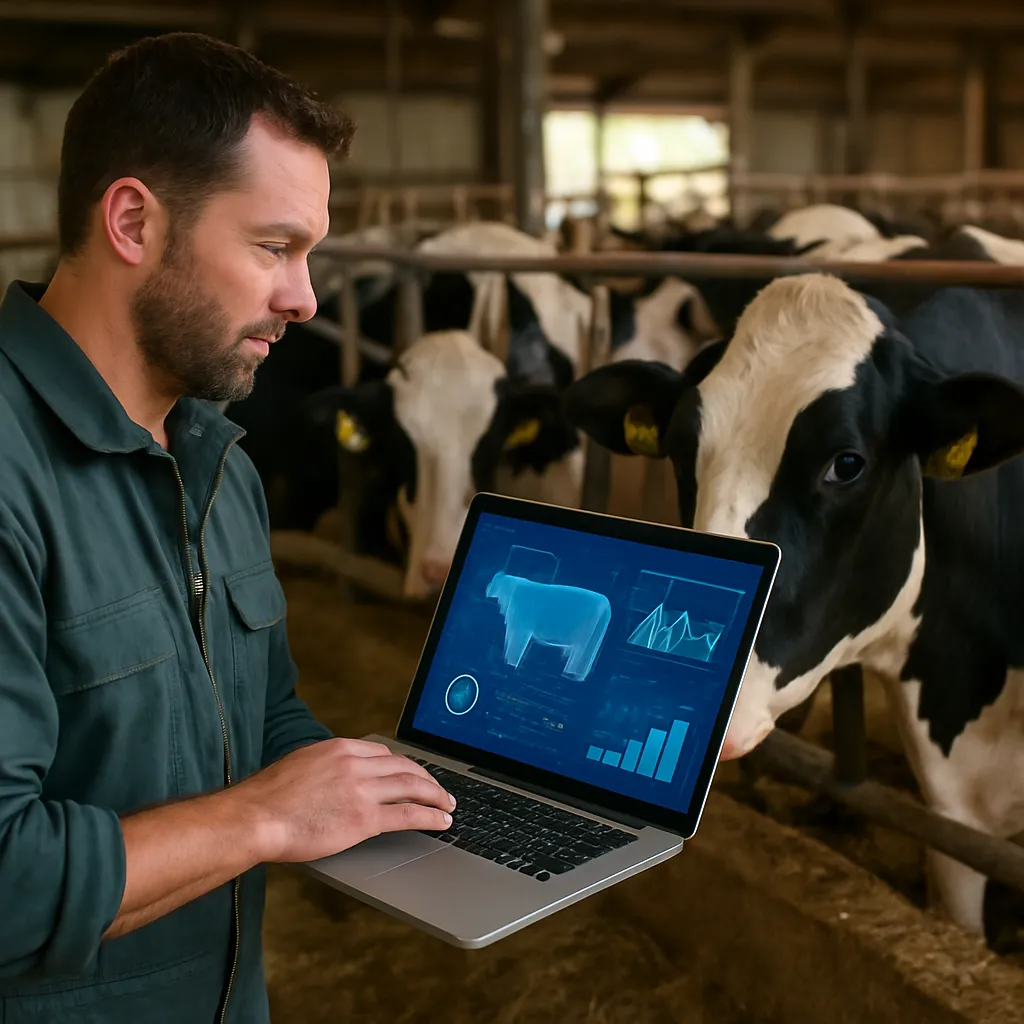
Livestock farming has reached a pivotal moment where advanced technologies intersect with traditional practices to revolutionize **health** management and production outcomes. By integrating real-time **data** streams and cutting-edge **AI** models, modern agriculture can identify risks long before they become crises, enhancing animal welfare and farm **efficiency**.
Embracing Sensor Networks in Livestock Operations
Deploying wearable collars, environmental probes, and smart feeders transforms everyday farm settings into dynamic observation platforms. Farmers can leverage:
- Sensors measuring temperature, heart rate, and activity patterns
- Automated weighing systems tracking growth curves
- Environmental monitors for humidity, air quality, and ammonia levels
These devices continuously funnel raw metrics into centralized repositories, enabling robust analytics. High-resolution temporal datasets allow for nuanced interpretations of normal versus aberrant behaviors. Integrating multiple data channels ensures that no critical signal goes unnoticed, supporting early intervention strategies and reducing outbreak probabilities.
Machine Learning Models for Risk Detection
Artificial intelligence applications employ a variety of **algorithms**—from decision trees to deep neural networks—to uncover hidden correlations. Key steps include:
- Data preprocessing and cleaning to remove outliers
- Feature engineering, selecting variables like feed intake, rumination cycles, and gait stability
- Training predictive classifiers to flag disease onset or metabolic disorders
Supervised Learning for Disease Classification
By labeling historical incidents of mastitis, lameness, or respiratory infections, models learn distinguishing patterns. Once deployed, these classifiers can assign risk scores to individual animals, prompting targeted health checks. Continuous model refinement ensures that evolving pathogen profiles are incorporated, maintaining high sensitivity and specificity.
Unsupervised Learning for Anomaly Discovery
Clustering and anomaly detection methods spotlight unusual groups of behavior without predefined labels. For example, an unexpected cluster of low-feed-intake events could signal emerging nutritional imbalances or equipment malfunctions. Rapid identification of such anomalies fosters preventive maintenance and nutritional adjustments before performance penalties escalate.
Integrating Predictive Insights into Farm Management
Translating algorithmic output into actionable directives requires seamless collaboration between software and stakeholders. Key considerations include:
- User-friendly dashboards presenting alert levels and recommended actions
- Automated notifications via mobile apps or SMS to veterinary teams
- Integration with herd management systems for scheduling treatments and vaccinations
When alerts trigger, farm personnel can prioritize checks on high-risk animals, allocate resources efficiently, and adjust environmental controls. Over time, detailed records of interventions and outcomes further enrich the model’s training set, creating a virtuous cycle of continuous improvement.
Benefits and Economic Implications
Proactive health risk management brings multiple advantages:
- Reduced veterinary costs through early **detection** of illnesses
- Lower mortality rates and improved overall herd productivity
- Enhanced traceability and compliance with food safety regulations
- Optimized resource use, decreasing feed waste and antibiotic consumption
Adopting predictive approaches can yield a substantial return on investment. A small-scale dairy operation, for instance, might see a 15–20% reduction in treatment expenses, while larger commercial ranches often achieve payback within 12–18 months. Moreover, healthier animals produce higher-quality products, strengthening market competitiveness.
Challenges and Future Directions
Despite the promise, implementing AI-driven health risk systems faces hurdles:
- High initial costs for sensor deployment and software licensing
- Data privacy concerns when sharing information across cooperatives
- The need for reliable connectivity in remote agricultural regions
- Skilled personnel capable of interpreting model outputs and maintaining systems
To address these issues, stakeholders are exploring open-source frameworks, cooperative data-sharing agreements, and hybrid cloud–edge computing for intermittent networks. Research into transfer learning allows models trained on one herd type to adapt rapidly to others, reducing dependency on extensive local datasets.
Conclusion
By weaving **machine learning** and real-time **monitoring** into livestock management, the agricultural sector stands on the brink of a new era. Predictive analytics fosters healthier herds, economic resilience, and sustainable resource use. As technology evolves, the synergy between humans and intelligent systems will redefine best practices in animal husbandry, enabling farms of every scale to thrive in a competitive landscape.