The integration of advanced technologies in modern agriculture has sparked a transformation in the way farmers manage fields and resources. By harnessing detailed soil information and applying inputs precisely where they are needed, producers can optimize both economic returns and environmental stewardship. The following sections delve into the principles, technologies, benefits, challenges, and future directions of precision fertilization powered by comprehensive soil mapping.
The Role of Soil Mapping in Modern Agriculture
Accurate knowledge of soil properties across a field is foundational to targeted input management. Soil mapping involves collecting samples, analyzing physical and chemical characteristics, and visualizing spatial variability through digital maps. This process unveils zones with differing soil fertility, pH levels, texture, and organic matter content, enabling customized fertilization plans that match crop requirements. Farmers no longer rely on uniform application rates across heterogeneous fields; instead, they follow detailed maps that highlight high-demand zones for nutrients such as nitrogen, phosphorus, and potassium. High-resolution mapping can also reveal potential constraints to root growth, water availability, and aeration, guiding decisions on soil amendments like lime or organic matter.
By integrating soil sampling data into a Geographic Information System (GIS), growers transform raw measurements into actionable maps. These maps serve as the blueprint for developing variable rate prescriptions, ensuring each segment of the field receives the ideal nutrient dose. As fields increase in size and complexity, the reliance on such spatially explicit information becomes indispensable, helping to maximize yield potential while minimizing waste and environmental runoff.
Technologies Driving Precision Fertilization
Remote Sensing and Drones
Unmanned aerial vehicles (UAVs) equipped with multispectral or hyperspectral sensors capture high-resolution imagery that reflects crop vigor, moisture stress, and nutrient deficiencies. By comparing reflectance patterns over time, agronomists can identify areas requiring intervention before symptoms become visible to the naked eye. Coupling these insights with soil maps allows for a dynamic approach to nutrient management, where fertilization events are timed and targeted based on real-time crop needs.
GPS and GIS Integration
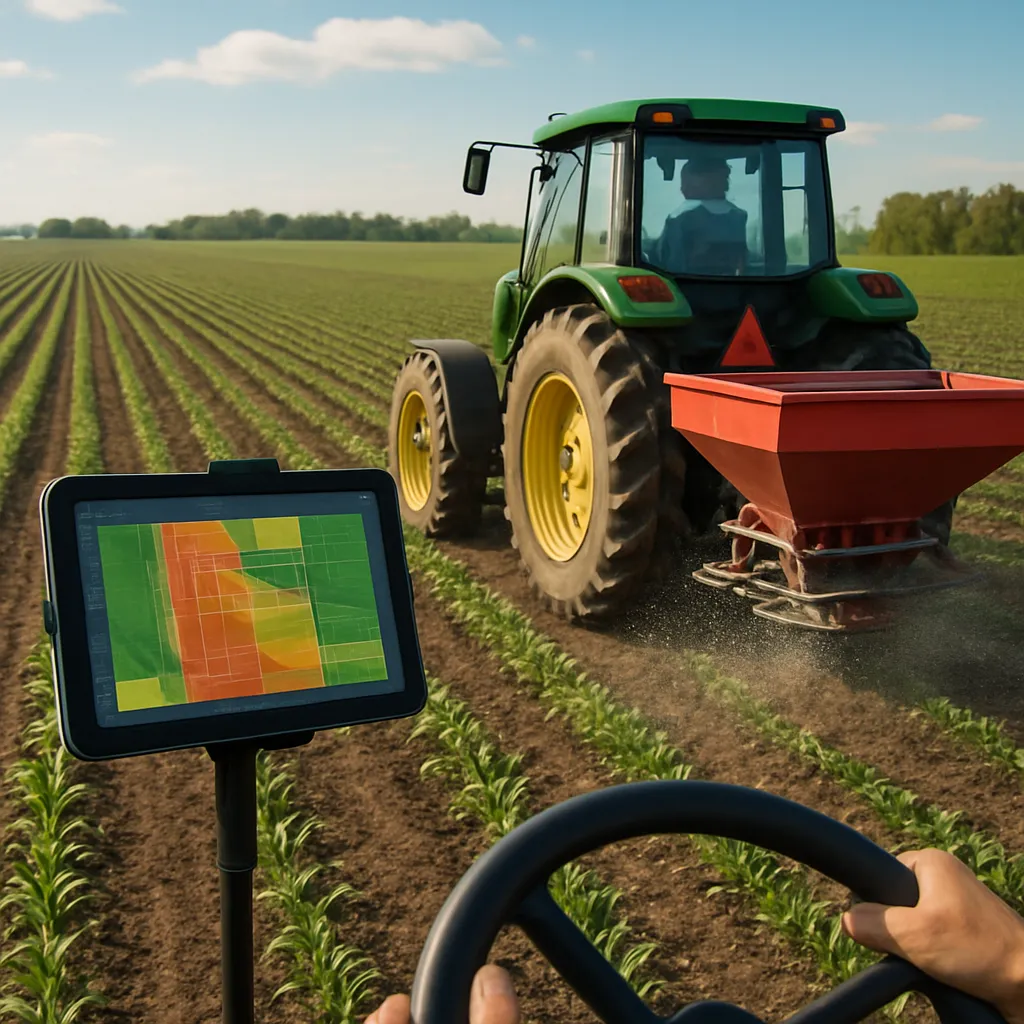
Global Positioning System (GPS) receivers on tractors and spreaders ensure that fertilizer applications follow precise trajectories. When integrated with GIS software, field machinery executes pre-planned variable rate prescriptions with centimeter-level accuracy. This fusion of location data and nutrient requirement maps enables operations such as grid sampling, zone delineation, and on-the-go adjustments, all of which contribute to improved input use efficiency.
Variable Rate Technology (VRT)
Variable rate application systems adjust fertilizer output in response to digital prescriptions. Advanced controllers process prescription maps in real time, regulating flow rates and nozzle activation to match the exact nutrient recommendation for each square meter of soil. This capability minimizes overlaps and skips, reduces costs, and curtails environmental impacts by preventing excessive nutrient loading.
Data Analytics and Machine Learning
Collecting vast amounts of soil and crop performance data is only the beginning. Sophisticated data analytics platforms employ machine learning algorithms to uncover patterns, predict yield responses, and refine nutrient recommendations over seasons. These tools can integrate weather forecasts, historical field performance, and remote sensing imagery to generate adaptive fertilization strategies that account for both short-term anomalies and long-term trends.
Benefits and Challenges of Precision Fertilization
Implementing targeted fertilization based on detailed soil maps delivers multiple benefits:
- Optimized input efficiency, lowering fertilizer costs and reducing waste.
- Enhanced crop health through balanced nutrient supply.
- Increased yield stability by addressing field variability.
- Reduced environmental footprint via minimized nutrient leaching and runoff.
- Better compliance with regulatory standards and sustainability goals.
Despite these advantages, several challenges may impede adoption. The initial investment in sensors, mapping services, and VRT equipment can be significant, particularly for smallholder producers. Data management complexity and the need for technical expertise may also present barriers. Ensuring accurate calibration of sensors and machinery is critical to avoid errors in prescription execution. Furthermore, soil properties evolve over time due to cropping cycles, erosion, and management practices, necessitating periodic remapping to maintain prescription relevancy.
Best Practices and Implementation Strategies
Successful deployment of precision fertilization hinges on a strategic approach:
- Conduct a thorough baseline soil survey, sampling at appropriate grid sizes to capture variability.
- Use reputable laboratories and consistent analytical methods to ensure data accuracy.
- Invest in user-friendly GIS platforms that integrate seamlessly with farm machinery.
- Train field operators and agronomists on equipment calibration, data interpretation, and troubleshooting.
- Implement an iterative process: apply prescriptions, monitor outcomes, adjust maps, and refine rates each season.
Close collaboration between farmers, agronomists, equipment dealers, and technology providers fosters a holistic understanding of field dynamics and system requirements. Peer learning through demonstration plots and field days can accelerate knowledge transfer, helping producers witness the direct impact of zonal fertilization on plant health and yields.
Future Trends and Innovations
The landscape of precision fertilization continues to evolve rapidly. Emerging trends include the integration of soil moisture sensors and real-time nutrient testing probes, enabling in-season adjustments that respond instantly to crop demands. Remote sensing technologies are advancing toward higher spectral resolution and automated anomaly detection, reducing the time and expertise required for image analysis. Internet of Things (IoT) networks will allow sensors scattered across fields to communicate wirelessly, feeding continuous data streams into cloud-based platforms for on-the-fly decision making.
Moreover, the push for sustainability drives the adoption of organic amendments, biofertilizers, and microbial inoculants, which can be integrated into variable rate frameworks guided by soil maps. Digital marketplaces may emerge where farmers buy and sell granular field data, ensuring that every stakeholder benefits from the collective knowledge of soil behavior under diverse management scenarios.
As technology costs decline and user interfaces become more intuitive, precision fertilization based on detailed soil mapping will gain traction across farms of all scales. By optimizing the placement and timing of inputs, producers can balance economic performance with environmental stewardship, marking a new era in nutrient management and agricultural productivity.