The rapid integration of digital technologies into agriculture is transforming the way farms operate, enabling more efficient resource management and higher crop yields. By processing data closer to where it is generated, farms can make decisions in real time, reducing waste and enhancing productivity. This article explores how edge computing is revolutionizing the agricultural sector, offering robust solutions for monitoring, analysis, and control on the modern farm.
Enabling Real-time Data Processing on the Farm
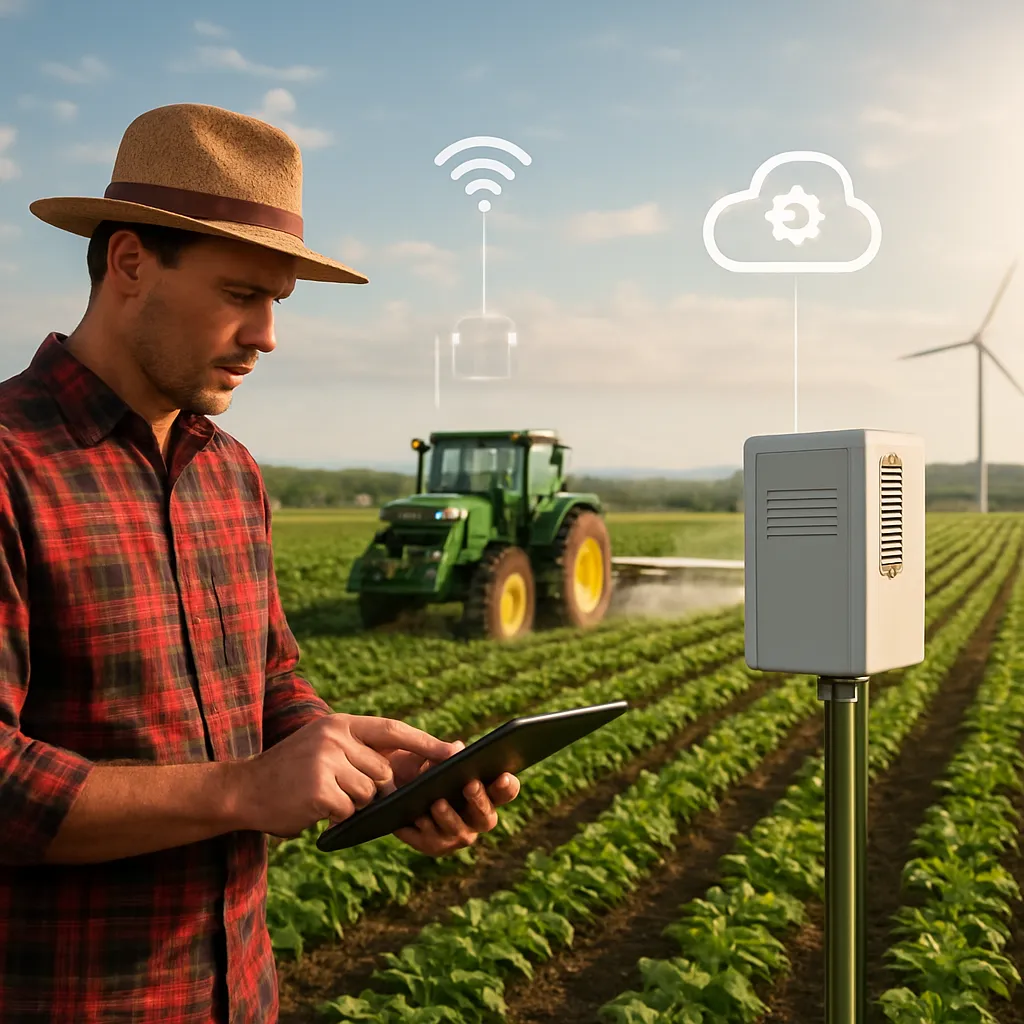
Smart farming relies on a dense network of IoT devices, including soil moisture probes, weather stations, and livestock monitors. Traditionally, data from these sensors would be transmitted to centralized cloud servers for processing, introducing significant latency and potential downtime if the internet connection falters. By deploying edge computing nodes directly in the field, farms can perform essential computations on site, ensuring continuous operation even in remote locations.
Local edge devices can preprocess raw sensor streams, filtering out noise and summarizing key metrics. This reduces the amount of data that needs to be sent to the cloud and accelerates response times for critical functions like irrigation control or frost protection. Furthermore, the proximity of edge nodes to the physical environment allows for adaptive thresholds: systems can autonomously adjust sprinkler schedules based on localized soil moisture readings rather than relying on generalized forecasts.
Adaptive Irrigation Management
- Edge units gather real-time soil and weather data
- On-device analytics determine optimal watering intervals
- Automated valves execute commands without cloud dependency
This approach not only conserves water but also minimizes energy consumption by operating pumps only when necessary. The synergy between automation and edge computing delivers immediate benefits in resource-limited environments.
Benefits for Precision Agriculture Practices
Precision agriculture aims to tailor farming practices to local variations within a field. By leveraging edge-based analytics, growers can implement variable rate seeding, fertilizing, and pest control strategies that reflect real-world conditions at the sub-field level. These targeted interventions boost yields while reducing chemical use and environmental impact, advancing long-term sustainability.
Edge computing also enhances machine vision applications for crop health assessment. High-resolution cameras and multispectral sensors mounted on tractors or drones capture imagery that is processed on edge devices equipped with GPU accelerators. Early detection of nutrient deficiencies, diseases, or pest infestations allows for rapid remediation, protecting harvests and lowering input costs.
Livestock Monitoring and Welfare
In animal husbandry, edge nodes connected to wearable collars or barn cameras monitor vital signs, feeding behaviors, and movement patterns. Instant alerts for anomalies—such as elevated temperatures indicating possible illness—help farmers intervene before small issues escalate. This continuous, localized processing upholds resilience in farm operations by mitigating risks associated with remote health tracking.
- Real-time tracking of grazing patterns
- Immediate notification of birthing events or health issues
- Integration with automated feeding systems
Challenges and Future Directions
Despite the promise of edge-enabled agriculture, several challenges must be addressed to ensure widespread adoption. Reliable connectivity between edge devices and central systems remains a hurdle, especially in regions with limited broadband infrastructure. Mesh networks, 5G rollouts, and satellite backhauls can mitigate these gaps, but each solution introduces trade-offs in cost and complexity.
Another concern is the management of distributed edge hardware at scale. Farms with hundreds of sensor clusters and compute nodes require standardized protocols for remote updates, maintenance, and data security. Ensuring that firmware and analytics models remain current without physical site visits will be critical for large agricultural enterprises.
Integrating AI and Machine Learning
Future edge platforms will embed more sophisticated AI algorithms, enabling predictive maintenance of farm machinery, yield forecasting, and automated decision support. By training models on historical and real-time data at the edge, systems can adapt to seasonal shifts and evolving climatic patterns, enhancing overall scalability of precision farming solutions.
- On-site model retraining for localized accuracy
- Federated learning approaches to preserve data privacy
- Edge-to-cloud coordination for advanced analytics
As farms grow increasingly interconnected, the convergence of edge computing with robotics, drones, and autonomous vehicles will drive new efficiencies. Robots equipped with edge processors can identify and harvest ripe produce, while aerial drones perform localized crop treatments. Such multi-layered automation dramatically reduces labor demands and optimizes field operations.