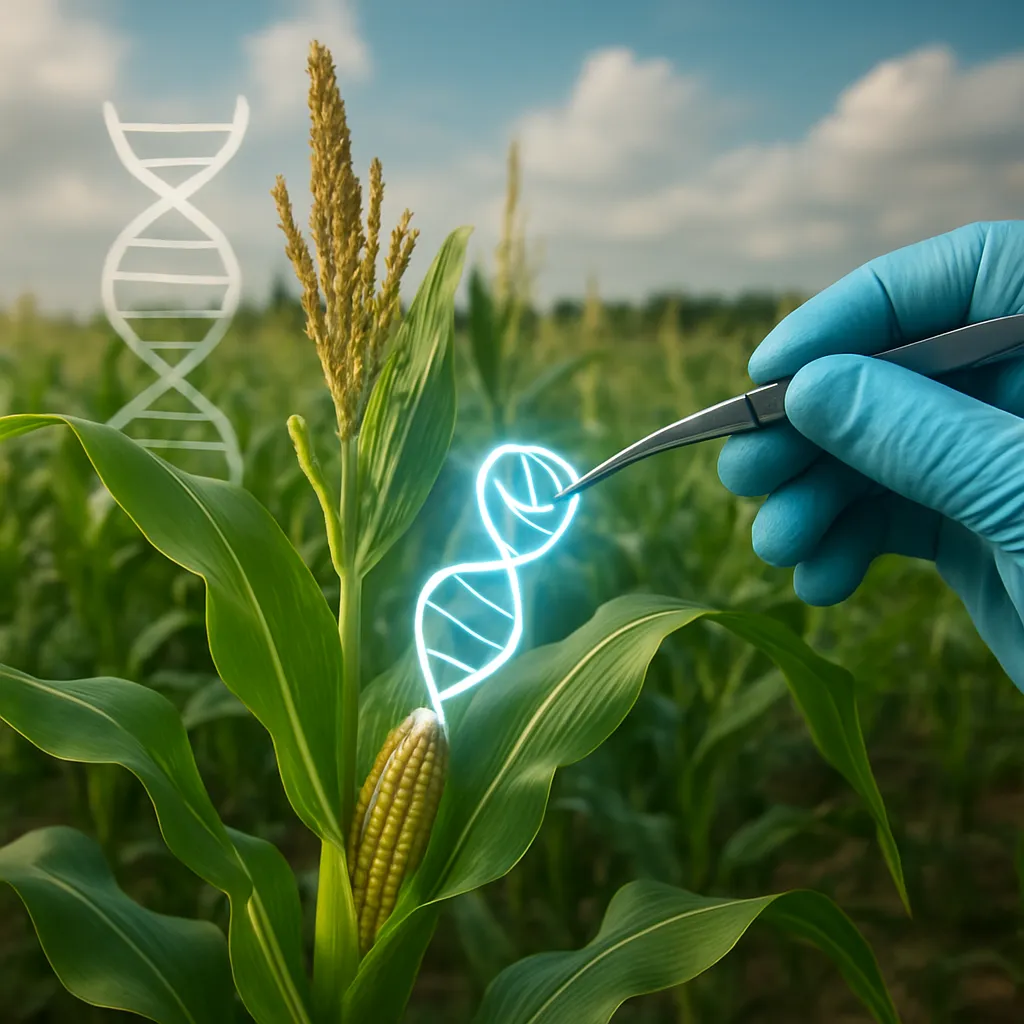
Advancements in genetic engineering have empowered researchers to reimagine the boundaries of modern agriculture. Among the tools shaping this revolution, CRISPR (Clustered Regularly Interspaced Short Palindromic Repeats) stands out for its unprecedented precision and versatility. By enabling targeted edits within plant genomes, CRISPR offers a pathway toward more resilient crops that can withstand the mounting challenges posed by climate change, pests, and dwindling arable land. This article delves into the transformative role of CRISPR in enhancing crop resilience, exploring its mechanisms, applications, and the road ahead for sustainable food production.
Understanding CRISPR and Its Mechanism
The CRISPR-Cas9 system, originally discovered as an adaptive immune defense in bacteria, has been repurposed as a powerful genome editing tool in the last decade. At its core, CRISPR relies on a short RNA guide that directs the Cas9 enzyme to a specific DNA sequence, where it induces a double-strand break. Following this cut, the cell’s natural repair machinery can be harnessed to introduce precise edits—either by disabling undesired genes or by incorporating beneficial traits through homology-directed repair.
This ability to perform targeted, site-specific modifications contrasts sharply with earlier breeding and mutagenesis techniques, which often involved random changes to the genome. As a result, CRISPR has drastically reduced the time needed to develop new plant varieties, while minimizing off-target effects. Furthermore, the modular design of guide RNAs allows researchers to multiplex edits, simultaneously improving multiple traits related to yield, nutritional content, and stress tolerance.
Enhancing Abiotic Stress Tolerance
A major application of CRISPR in agriculture focuses on boosting plant resilience against abiotic stresses such as drought, salinity, and extreme temperatures. Conventional breeding for these traits has proven slow and often yields modest gains. CRISPR expedites this process by precisely manipulating genes associated with stress response pathways.
Drought Resistance
Water scarcity poses a critical threat to global food security. Scientists have utilized CRISPR to tweak genes regulating stomatal aperture and root architecture, thereby improving water use efficiency. For instance, targeted mutagenesis of certain transcription factors has produced rice lines with deeper root systems, allowing these plants to extract moisture from lower soil strata during dry spells. Field trials have shown up to a 20% yield improvement under limited irrigation conditions without compromising grain quality.
Salinity Tolerance
Soil salinization affects over 20% of irrigated lands worldwide, impeding plant growth by disrupting ion homeostasis. CRISPR-mediated edits in ion transporter genes have generated tomato and soybean varieties that better sequester excess sodium ions into vacuoles. These plants exhibit reduced leaf scorching and maintain higher photosynthetic rates in saline soils. Such breakthroughs could unlock previously unproductive lands for cultivation, expanding the global food supply buffer.
Bolstering Disease Resistance and Pest Management
Crop losses due to pathogens and pests account for substantial yield reductions, threatening livelihood and nutritional access in vulnerable regions. Traditional methods, including chemical pesticides and conventional breeding, often fall short due to evolving resistance. CRISPR offers a sustainable alternative by directly disabling susceptibility genes or enhancing innate immunity.
- Pathogen Resistance: Researchers have edited susceptibility (S) genes in wheat to create varieties resistant to powdery mildew. By knocking out specific MLO genes, the plants no longer support fungal colonization, leading to durable resistance without reliance on fungicides.
- Virus Immunity: Plant viruses such as cassava mosaic virus cause devastating losses in important staples. Using CRISPR, scientists have developed cassava lines with targeted deletions in viral replication sites, conferring robust immunity and safeguarding yield in sub-Saharan Africa.
- Insect Defense: In cotton and maize, CRISPR has been used to alter genes that code for cell wall components, making the plants less nutritious or more toxic to chewing insects. This genetic strategy reduces the need for chemical insecticides and lowers environmental impact.
Accelerating Breeding Programs
Integrating CRISPR into conventional breeding pipelines accelerates the introduction of valuable traits into elite cultivars. By combining marker-assisted selection with targeted editing, breeders can stack multiple resilience traits—such as drought tolerance, disease resistance, and nutrient efficiency—within a single breeding cycle. This synergistic approach slashes development timelines from a decade down to just a few years.
In addition, CRISPR can facilitate de novo domestication of wild relatives. Many wild plants possess inherent resilience traits but lack agronomic qualities like high yield or uniform fruiting. Through precise editing of domestication genes—such as those controlling seed shattering or plant architecture—wild species can be transformed into new crops that merge robustness with desirable farming characteristics.
Regulatory Landscape and Ethical Considerations
The rapid progress of CRISPR in agriculture has outpaced the evolution of global regulatory frameworks. While some countries treat CRISPR-edited crops similarly to conventionally bred varieties—focusing on the absence of foreign DNA—others impose stringent GMO-style assessments. Harmonizing these regulations is critical to ensuring equitable access to CRISPR innovations and preventing trade barriers.
Ethical debates also surround the deployment of genome editing in food systems. Advocates argue that CRISPR can reduce pesticide use, enhance nutrition, and improve food security. Critics raise concerns over unintended off-target effects, potential biodiversity loss, and corporate control over seed supplies. Transparent risk assessments, public engagement, and open-access breeding programs can help mitigate these concerns while fostering trust.
Future Directions and Innovation Hubs
Emerging CRISPR technologies—like base editing and prime editing—promise even greater accuracy and versatility. Base editors allow single-nucleotide changes without causing double-strand breaks, reducing the risk of unintended mutations. Prime editing expands the toolkit further by enabling insertions, deletions, and all twelve possible base-to-base conversions with high fidelity.
Collaborative innovation hubs are springing up worldwide, bringing together scientists, farmers, and policymakers to co-develop context-specific solutions. In regions facing acute food shortages, CRISPR is being tailored to local crop staples such as millet, sorghum, and cassava. By integrating indigenous knowledge with cutting-edge science, these initiatives aim to deliver resilient varieties that respect cultural preferences and farming practices.
The marriage of CRISPR with digital agriculture, including AI-driven phenotyping and drone-based monitoring, will further revolutionize crop management. Real-time data analytics can pinpoint stress events and trigger targeted gene edits, ushering in an era of dynamic, precision-guided breeding. This synergy holds the promise of sustainable intensification—producing higher yields on existing farmland while minimizing environmental footprint.
Key Takeaways
- CRISPR enables rapid, targeted edits to boost crop resilience against environmental and biological stresses.
- Enhanced abiotic stress tolerance and disease resistance reduce reliance on chemicals and expand arable land availability.
- Future editing tools and collaborative hubs will drive localized innovations, ensuring food security and sustainability.