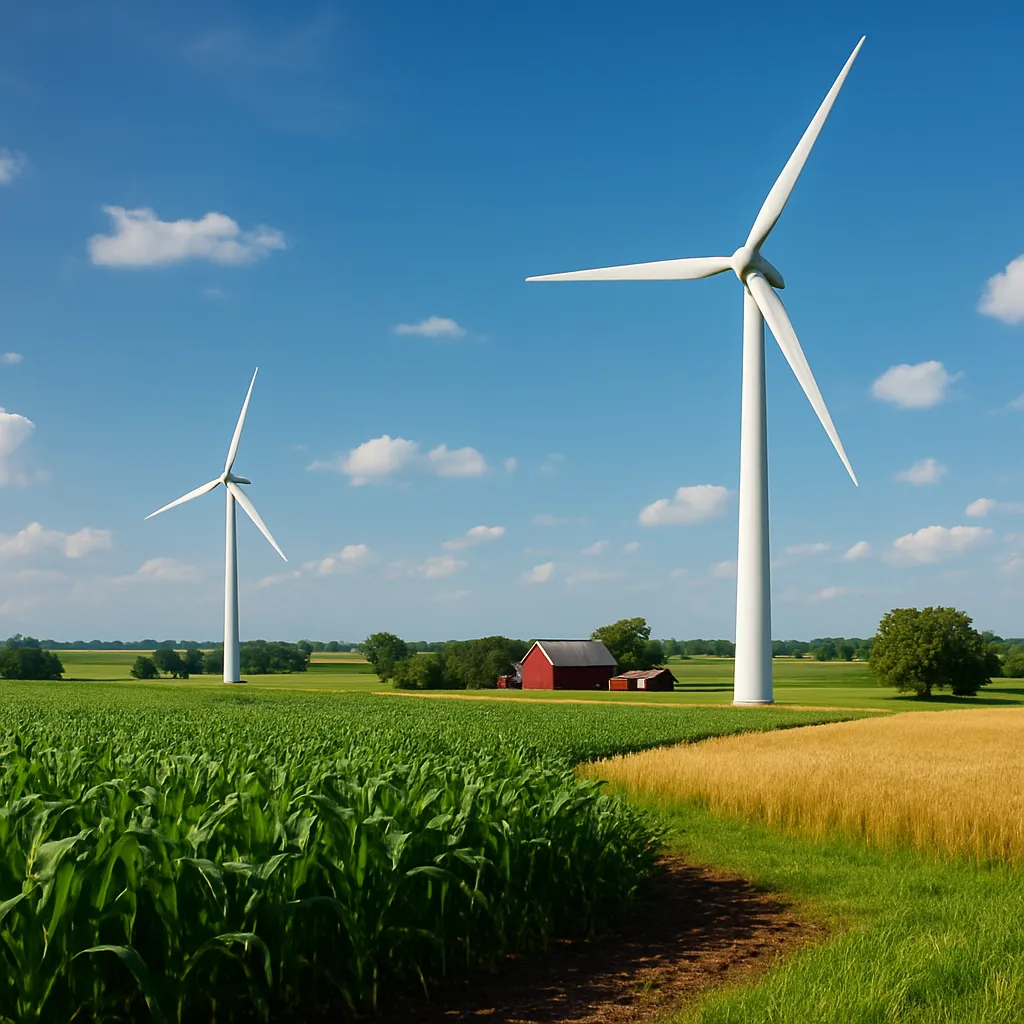
The intersection of modern turbines and traditional farming has opened a novel avenue for empowering agrarian communities. By harnessing the persistent power of the wind, rural estates can achieve unprecedented levels of sustainability and resilience. As global food demands rise and energy costs fluctuate, integrating on-site renewable generation into agricultural operations emerges as a smart strategy. Wind installations not only reduce reliance on external grids but also offer a complementary source for irrigation, grain processing, and cold storage. The transition to self-sufficient energy ecosystems enables farmers to focus investment on growth and innovation, rather than utility bills. In this exploration, we delve into the technical, economic, and social dimensions of deploying wind solutions in the countryside, illustrating how a breeze can power barns, boost yields, and safeguard livelihoods.
Benefits of Wind Energy in Modern Agriculture
Integrating wind installations yields numerous advantages for rural enterprises:
- Cost Savings: On-site generation offsets electricity purchases, stabilizing operational expenses.
- Energy Independence: Farms become less vulnerable to outages in centralized grids, ensuring critical systems like drainage pumps and temperature control remain active during storms.
- Carbon Reduction: By displacing diesel generators and coal-powered utilities, wind turbines cut greenhouse gas emissions, aligning agricultural practices with environmental stewardship.
- Enhanced Resilience: Coupled with battery storage or microgrid frameworks, wind power cushions farms against price spikes and supply disruptions.
- Revenue Streams: Surplus electricity can be sold back to the grid or utilized by neighboring communities under net metering schemes.
Beyond tangible returns, the adoption of renewable technologies can elevate a farm’s brand image, attracting eco-conscious consumers and potential grant funding. Through strategic placement of turbines near barns or fields, producers can minimize land use conflict while maximizing resource synergy.
Technological Synergies and Design Considerations
Successful wind deployments on agricultural land demand careful planning. Factors to assess include:
- Average wind speed and directional consistency across seasons.
- Local topography, avoiding turbulent airflows caused by hills or structures.
- Proximity to electrical infrastructure for grid ties or backup supply lines.
- Foundation and soil conditions, ensuring structural stability for towers.
Farmers can choose from a spectrum of turbine models, from small-scale (off-grid) units generating a few kilowatts to utility-scale installations producing megawatts. Hybrid configurations—combining wind with solar arrays or biogas generators—enhance overall efficiency by filling production gaps during low wind periods.
Site Assessment and Feasibility
A thorough feasibility study encompasses meteorological data analysis, load profiling, and financial modeling. Seasonal variations in demand (for example, high irrigation loads in summer months) should align with peak wind patterns to maximize self-consumption.
Grid Integration vs. Standalone Systems
Grid-tied setups allow farms to export excess energy, earning credits while retaining access to stable backup power. In contrast, standalone microgrids offer full autonomy but require battery banks or complementary generation to smooth supply fluctuations. Advanced controls can orchestrate seamless switching between sources, protecting sensitive equipment such as milking machines or seed dryers.
Economic and Community Impact
Financing wind projects has become more accessible through creative mechanisms:
- Leasing Arrangements: Turbine providers install and maintain equipment in exchange for a portion of generated kilowatt-hours.
- Power Purchase Agreements (PPAs): Long-term contracts guarantee a fixed rate for electricity output, reducing revenue uncertainty.
- Government Incentives: Tax credits, grants, and low-interest loans targeted at renewable energy can slash upfront capital requirements.
When multiple landowners collaborate on a shared installation, economies of scale drive down per-farm costs. Community wind cooperatives forge stronger ties among neighbors, distributing both risk and reward. Local technicians gain employment in construction, maintenance, and data monitoring, fostering rural job creation.
Case Study: Midwestern Grain Cooperative
In the American Midwest, a collective of grain producers installed a cluster of 750 kW turbines along their county’s ridge line. They financed 30 percent through a state grant and secured a PPA covering 20 years. Annual savings exceeded 15 percent of their electrical budget, and excess production fed nearby towns. The project revitalized local economies by hiring ten full-time technicians and selling carbon offsets to regional manufacturers.
Social and Environmental Co-Benefits
Wind farms coexist with grazing sheep, pollinator-friendly buffer strips, and heritage orchards. This multi-use approach preserves biodiversity and enriches ecosystem services. Public outreach programs highlight the alignment between energy innovation and agricultural heritage, building trust and minimizing opposition.
Future Prospects and Scaling Potential
As turbine technology advances, rotor diameters grow while costs decline. Enhanced blade materials and smart controls promise higher capacity factors and lower maintenance needs. Furthermore, digital twins and remote monitoring systems empower predictive servicing, reducing downtime and extending asset lifespans.
Emerging concepts include:
- Agri-PV-Wind Hybrids: Integrating photovoltaic panels between turbine rows balances daytime solar peaks with nocturnal wind surges.
- Floating Turbines over irrigation ponds: These floating platforms generate power while shading water reserves, reducing evaporation.
- Blockchain-enabled energy trading among farms, creating peer-to-peer markets for surplus electricity.
Ultimately, the synergy between agriculture and wind energy heralds a decentralized future where fields and pastures double as clean power hubs. By embracing this shift, farming communities can unlock new levels of productivity, environmental stewardship, and economic security. The breeze that sweeps over rural landscapes may soon be as vital to our food systems as the rain that nourishes the soil.